
Winter Hiking for Beginners
Your First Winter Hike
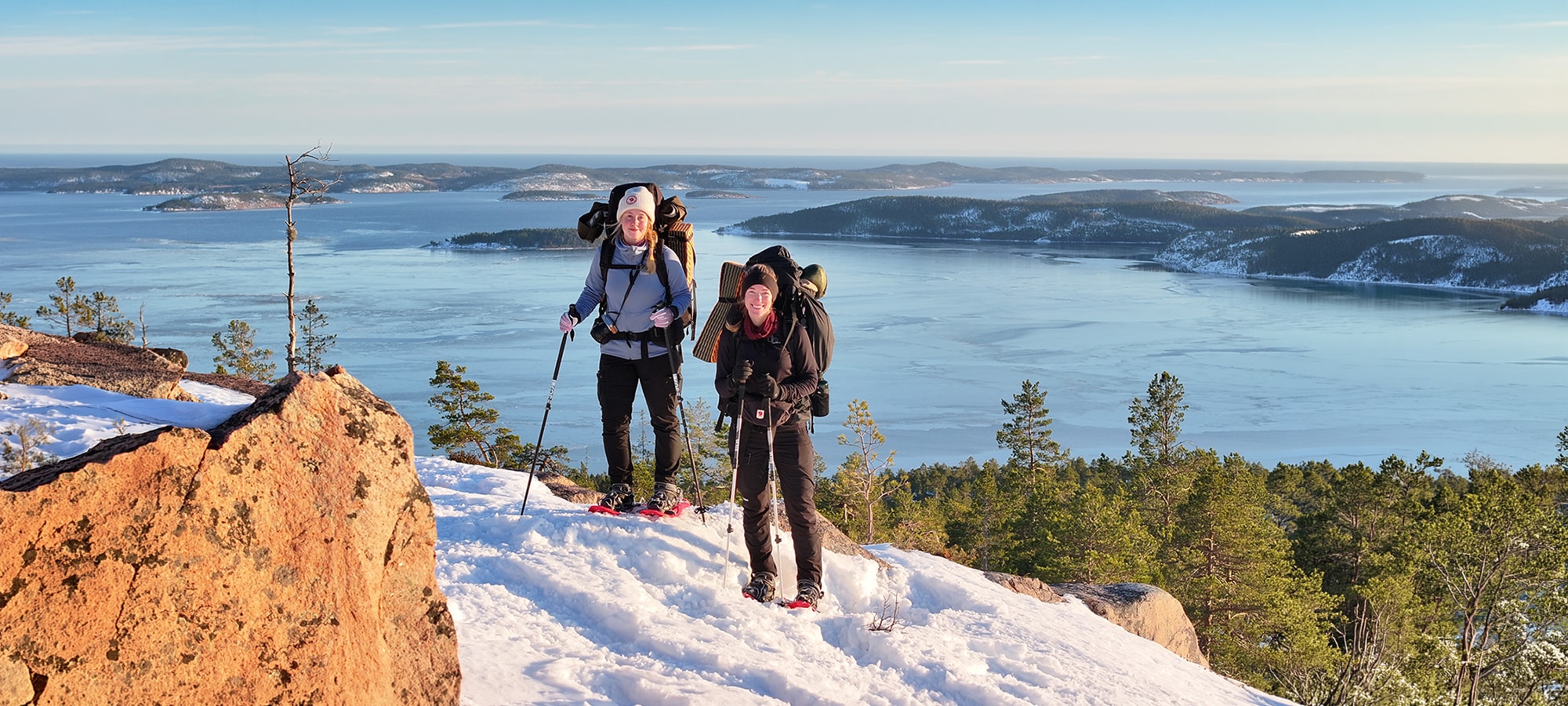
Hiking through snow-covered landscapes is something truly special. The silence, the cold and the endless white scenery create an almost Arctic feeling. With the right clothing and a few basic winter hiking skills, a whole new kind of adventure opens up – one that everyone should experience at least once.
Build on What You Already Know
You probably already understand most of the basics. When it gets colder, you add another layer. When you get warm, you open up and ventilate. And when you stop, you put on something warmer again. Winter hiking is built on a few simple principles.
A good shell protects you from wind and snow, while the layers underneath can be adjusted depending on the temperature, wind and how active you are. Wool next to the skin is a great choice, followed by insulating mid-layers and a warm jacket that is easy to pull on when you stop.
When the trail climbs, you will warm up quickly, so it helps to open up and let some heat out. When you stop to enjoy the view, have coffee or eat lunch, the warm jacket comes back on.
That is really the key to staying comfortable while winter hiking: dress in layers and adjust them to the weather, your pace and your level of activity.
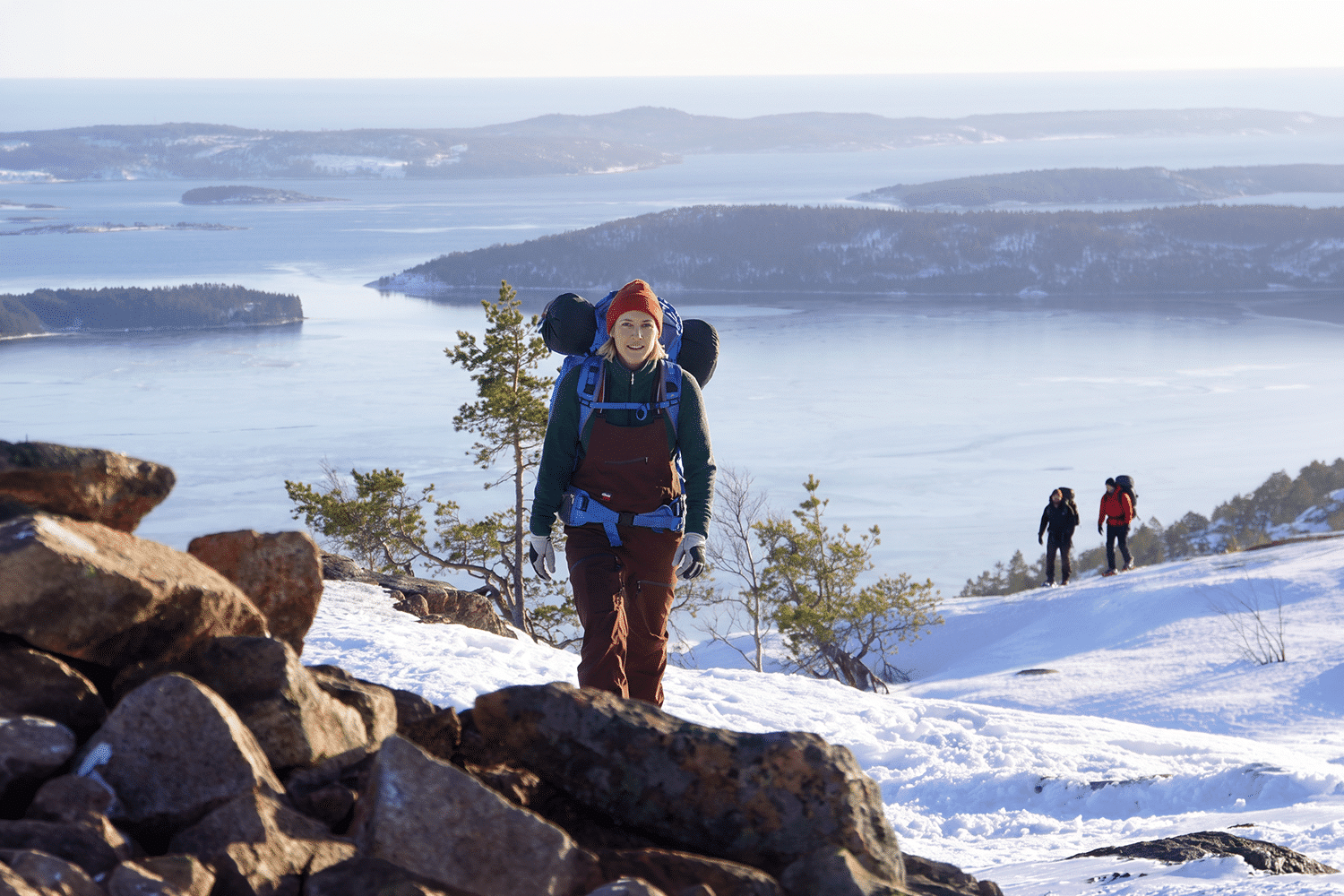
You probably already know more than you think. A good shell, a few layers underneath and clothing that is easy to adjust will take you a long way. Once you start moving, you warm up quickly – and before long, you will get a feel for what works best for you.
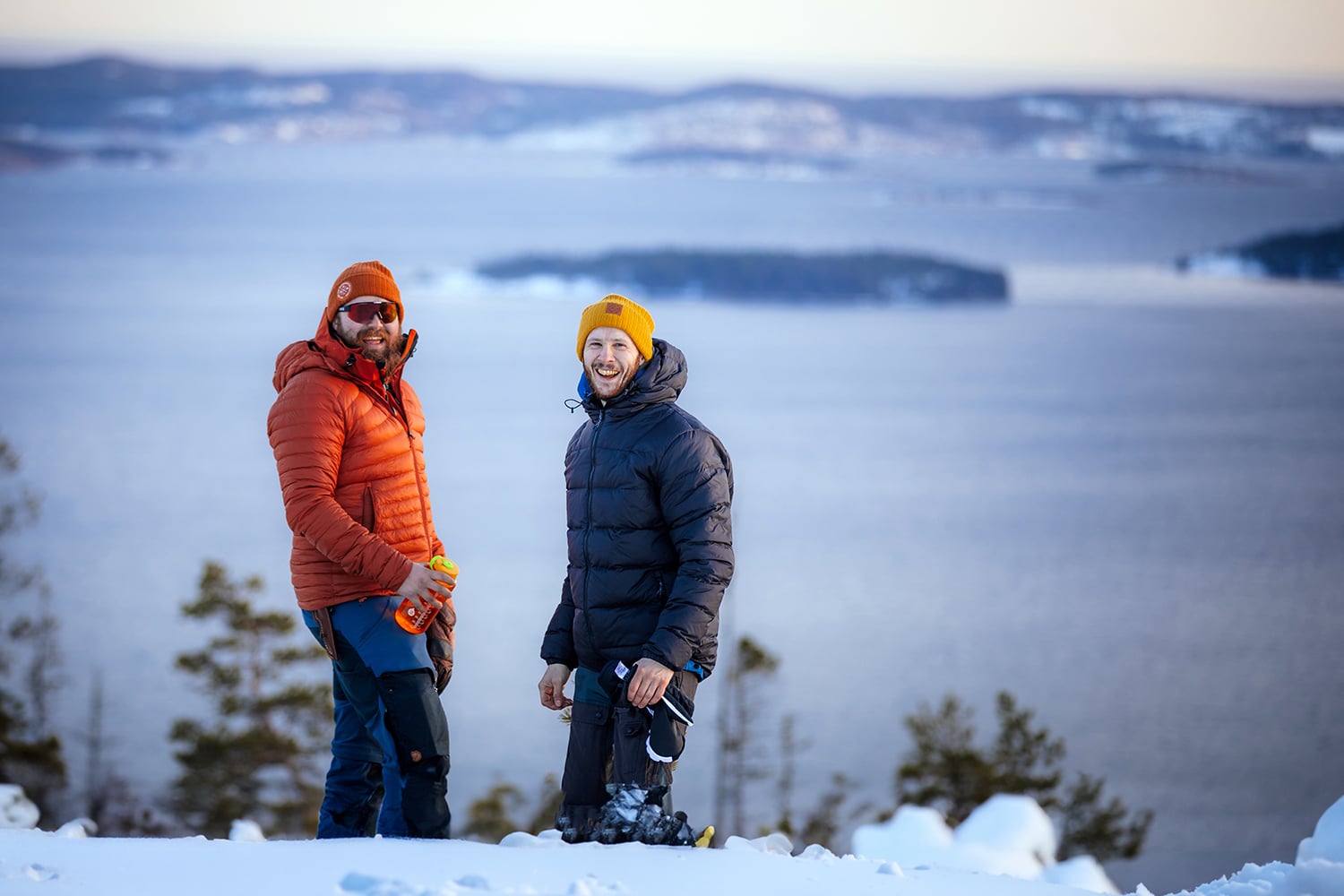
One of the great things about winter hiking is how quickly you learn how your body responds. When the trail climbs, you open up and ventilate. When you stop to enjoy the view, you put on your warm insulating jacket. Simple, natural – and before long, you barely have to think about it.
Keep Your Hands and Feet Warm
Your hands, feet and head deserve a little extra attention during winter hikes. Good gloves, warm socks and a hat can make a big difference, and carrying an extra pair of gloves in your backpack is always a good idea.
If it gets really cold or windy, it also helps to protect your neck and face with a buff or balaclava.
As with the rest of your clothing, the key is to pay attention to how you feel and adjust to the day’s temperature, wind and level of activity.
Snowshoes Open Up the Winter Landscape
When you check in at FriluftsByn, you can pick up your snowshoes. They are easy to use, and we will quickly show you how they work.
Snowshoes spread your weight across the snow, making it easier to move through forests, across open wetlands and up towards the mountains even when the snow is deep.
The technique usually comes quickly. After a while, you find your rhythm, stop thinking about the snowshoes themselves and start looking up at the landscape instead. And that is when something changes. Places that feel familiar in summer suddenly become vast, white and almost wild.
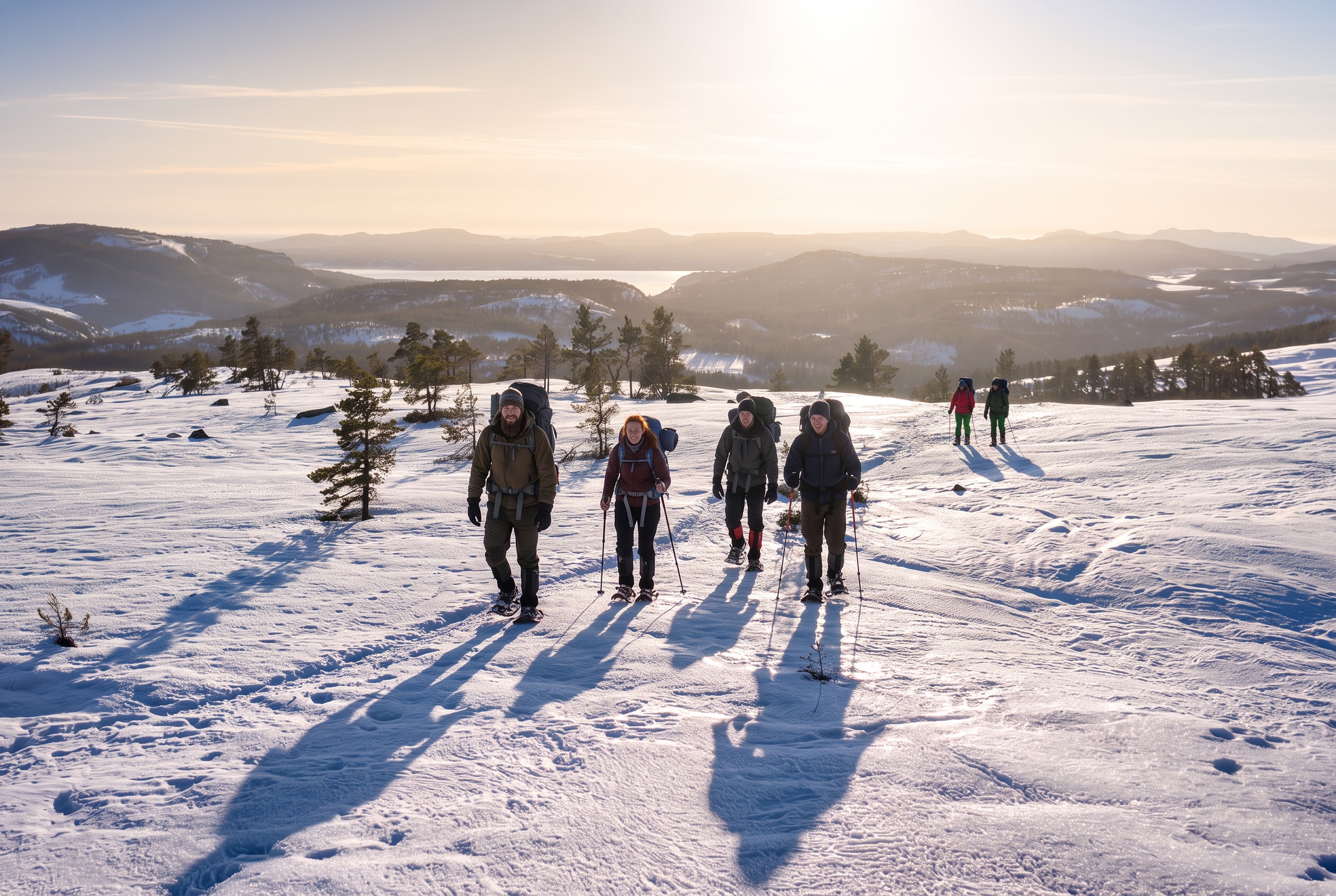
You hike at your own pace, but you are never alone on the trail. On both Discovery and Expedition, guides are positioned at the front, at the back and along the route. It gives you a reassuring sense of support while still allowing you to find your own pace.
The Breaks Are a Big Part of the Adventure
During the day, we hike to some of the most spectacular viewpoints in the High Coast. When you stop at the top, you pull on your warm insulating jacket, perhaps sit down on your sleeping mat and get your stove out. Then you can sit there with a hot cup of coffee or tea in your hands, looking out across the vast snow-covered landscape.
Breakfast, lunch and dinner are included in the adventure, but you bring your own stove, as well as coffee, tea and snacks. Make sure you have tested the stove at home beforehand and feel confident using it.
During the day, you will use the stove both for hot drinks and, when needed, to boil or melt snow for water.
Those moments when you stop, put on something warm, enjoy something good to eat or drink and simply take in the view often become some of the most memorable parts of the whole hike.
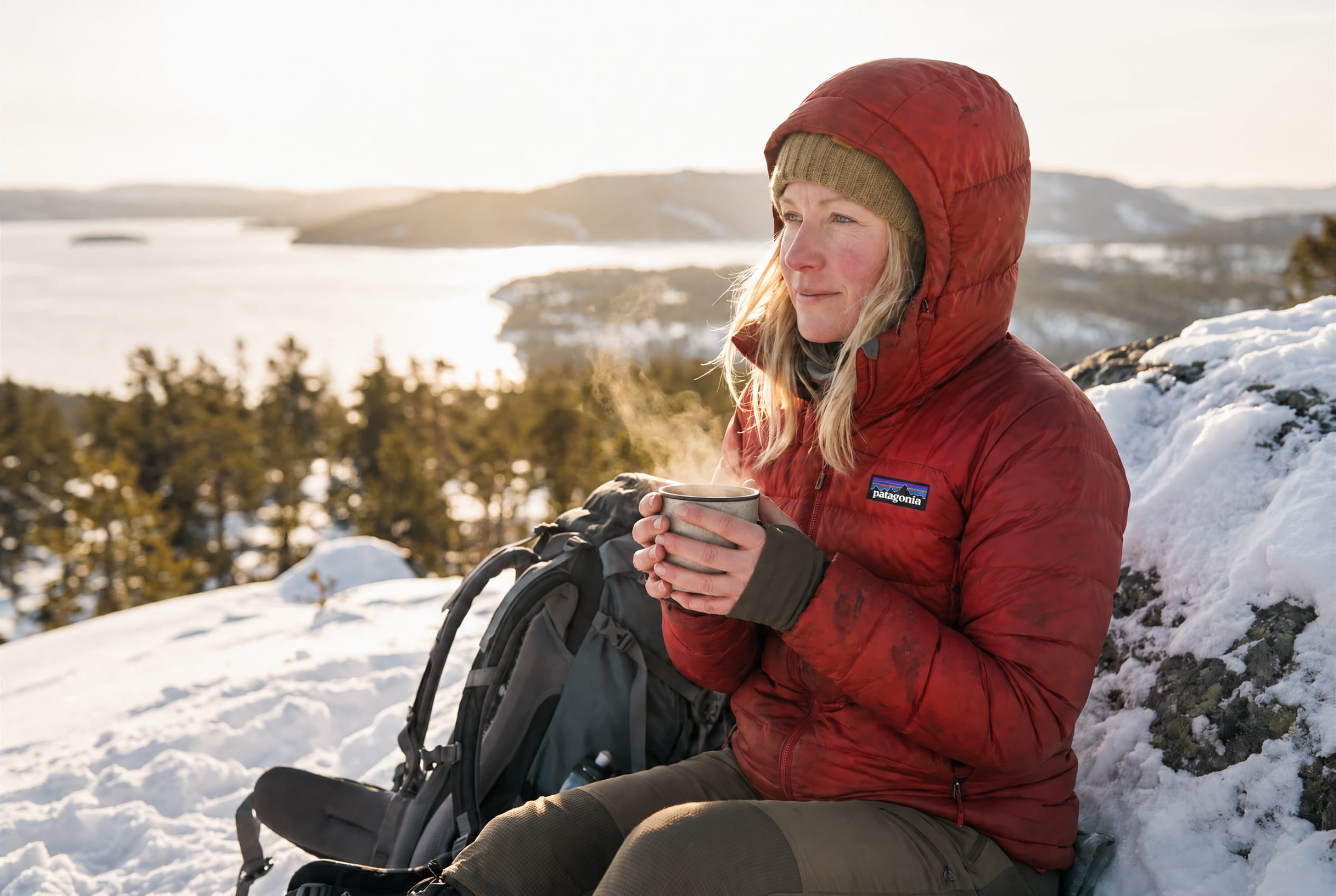
You hike at your own pace, but you are never alone on the trail. On both Discovery and Expedition, guides are positioned at the front, at the back and along the route. It gives you a reassuring sense of support while still allowing you to find your own pace.
The Weather Sets the Conditions for the Adventure
The weather naturally shapes how a day of winter hiking will feel. A few degrees below freezing with little wind can be surprisingly comfortable, while the same temperature in stronger winds means you need to think a little more about clothing, breaks and pace.
That is one of the advantages of heading out together. Our guides follow the forecast closely and have the experience to adapt the day to the conditions. Sometimes that means choosing a different route, taking a break earlier or spending less time in exposed areas.
For you, that means you do not have to carry all the responsibility yourself. We make the decisions together and adapt the day to the weather we actually encounter.
It creates a reassuring sense of safety – and allows you to focus more of your energy on the experience itself.
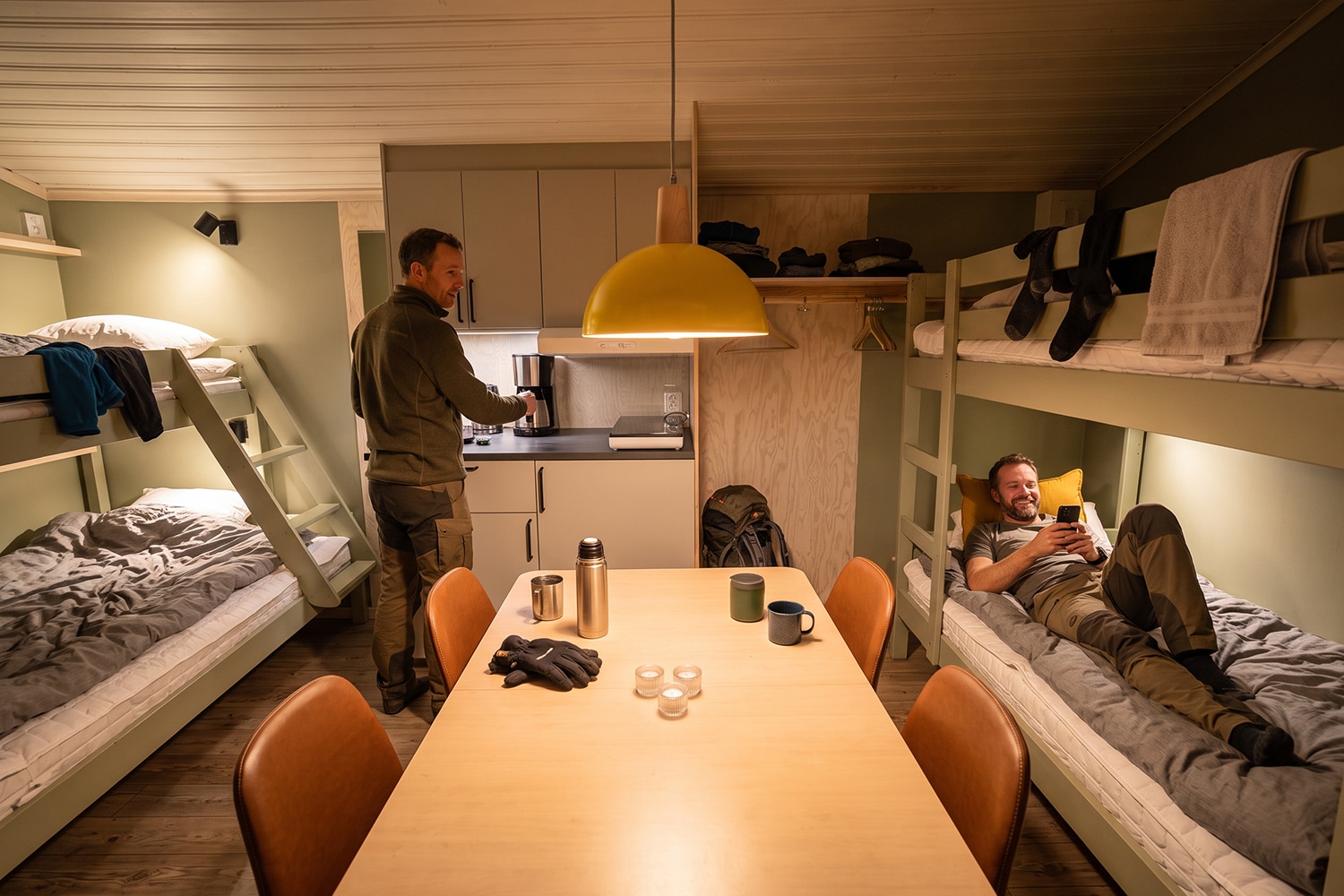
Choose Discovery if you want to return to the warmth of FriluftsByn each evening.
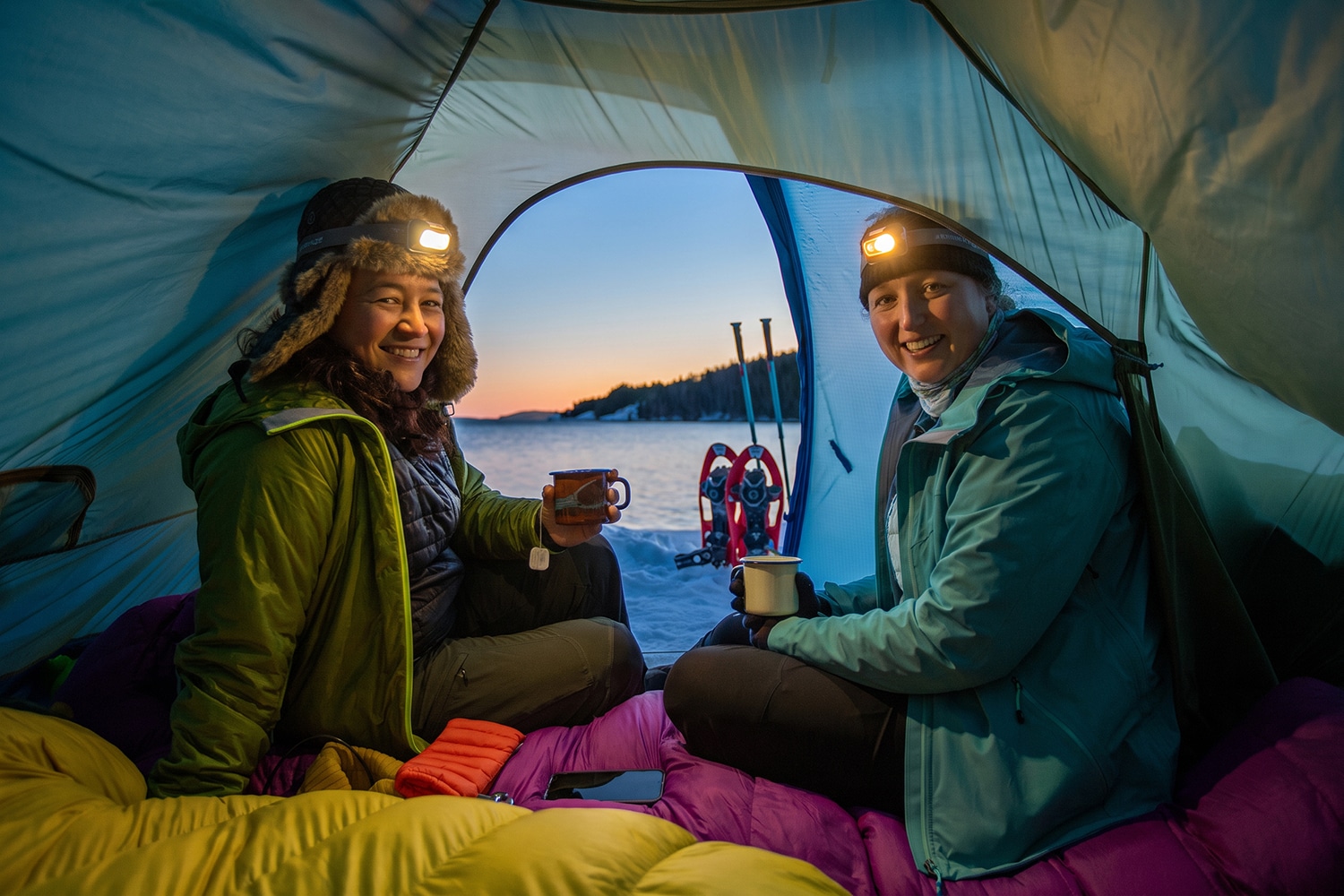
Choose Expedition if you want to spend the night at our shared basecamp in the heart of the High Coast World Heritage Site.
Two Ways to Experience the Winter Adventure
At the High Coast Winter Hike, you can choose between two different ways to experience winter in the High Coast.
Expedition is for those who want to immerse themselves fully in the winter experience. You hike through the High Coast and spend two nights at our shared winter basecamp. Tents stand in the snow, fires burn in the evening and each day ends together outdoors. You use a tent, sleeping bag and sleeping mat, and learn what life in a winter camp is really like. Waking up in your tent in the middle of a snowy winter landscape is an experience in itself.
Discovery gives you the same feeling of big winter days, with snowshoes, mountains and some of the most beautiful places in the High Coast. In the evening, you return to the warmth of FriluftsByn. That makes Discovery a great choice for your first winter hike while still giving you the full experience of real winter days out in the landscape.
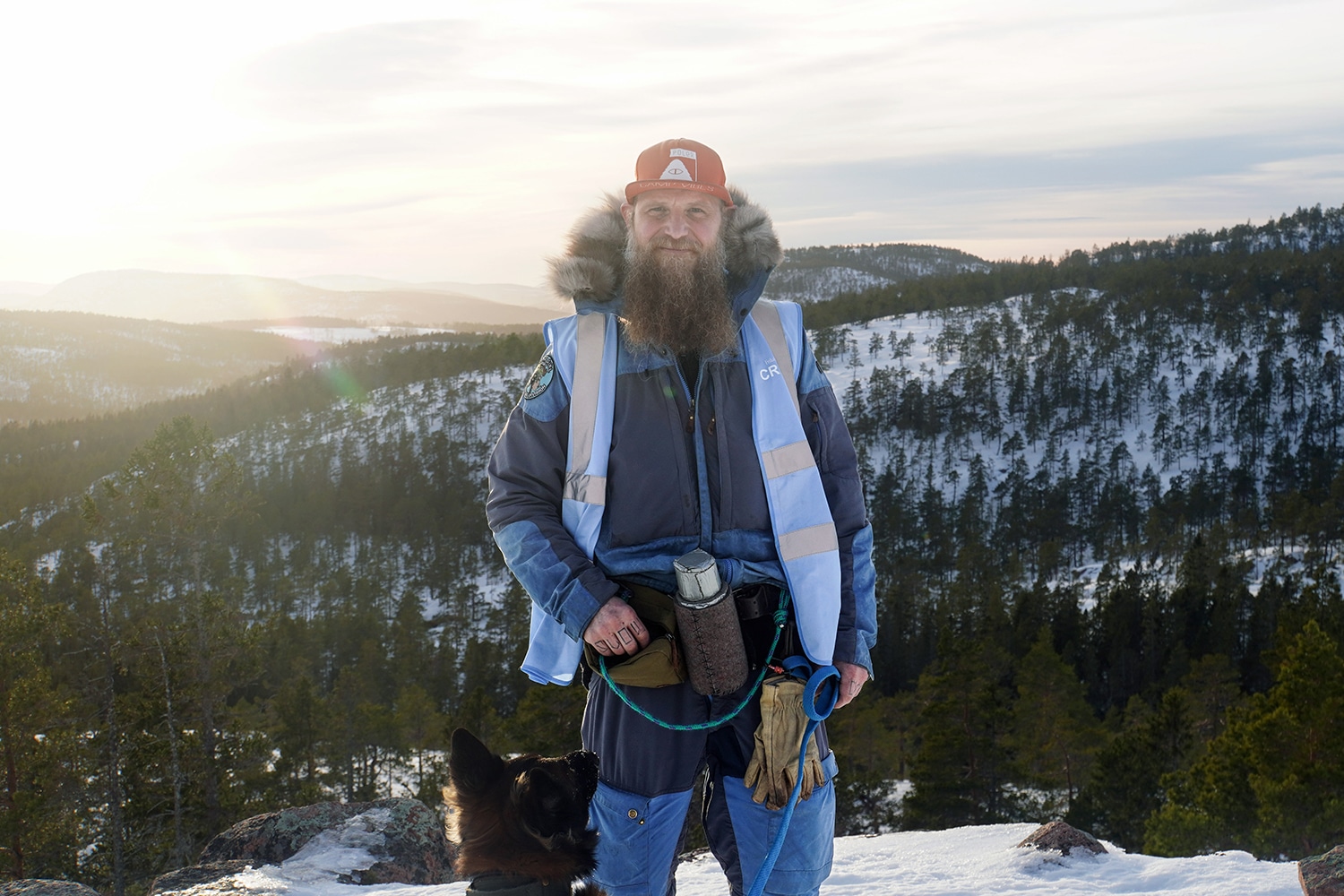
You hike at your own pace, but you are never alone on the trail. On both Discovery and Expedition, guides are positioned at the front, at the back and along the route. It gives you a reassuring sense of support while still allowing you to find your own pace.
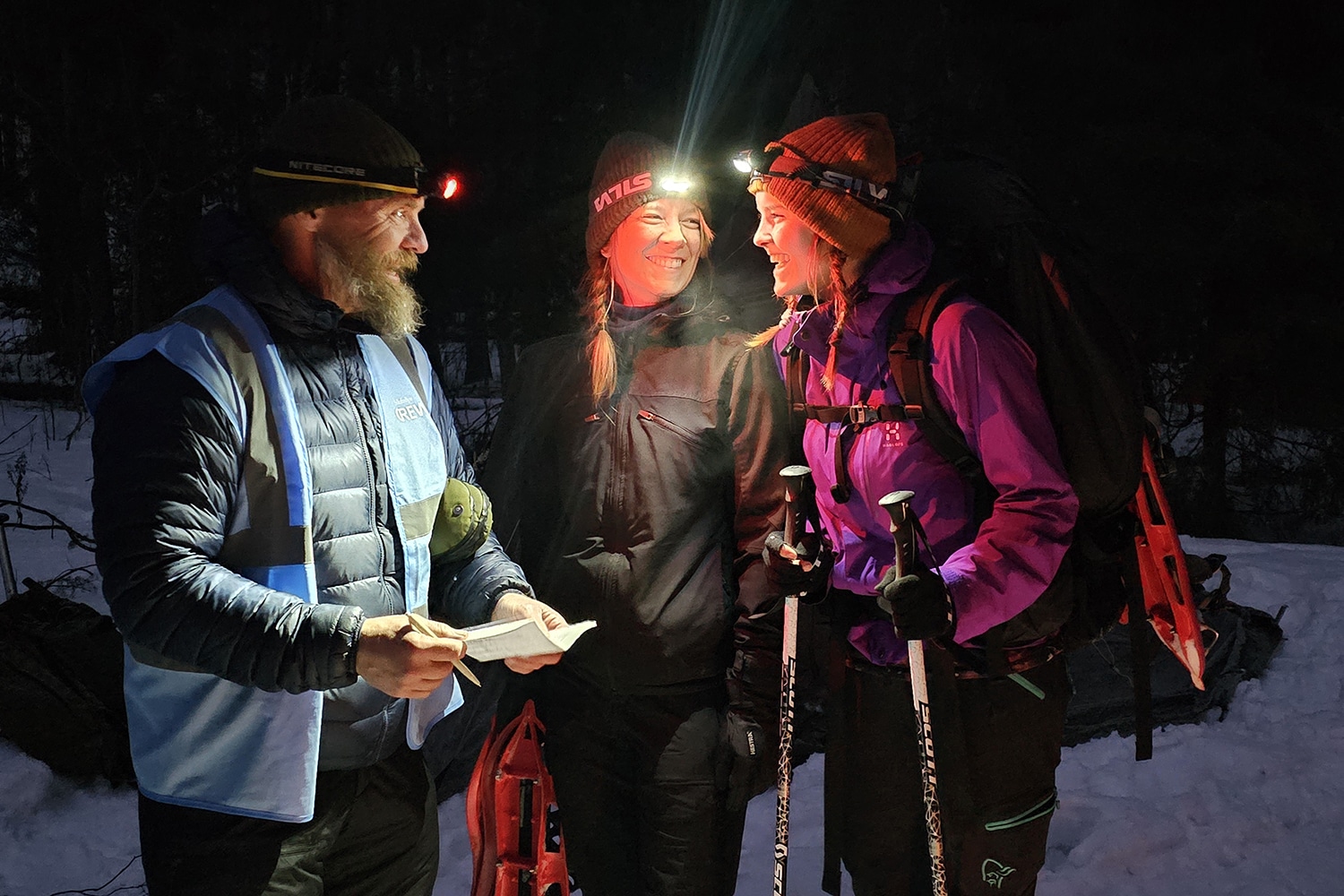
When you head out, we check you off at the start, and when you reach the end of the day’s stage, you check in again. That way, we always know that everyone has arrived safely. The route is easy to follow, and you will also receive a phone number to call if you need assistance along the way.
Learning by Doing
One of the great things about winter hiking is that the basics are quite simple to understand – and with the right preparation, most people can learn to feel confident outdoors in winter.
It is when you start trying things for yourself that everything begins to fall into place. How many layers you need. When to ventilate. How snowshoes feel in different types of snow. How your stove works in cold conditions. And how your body responds during a full day outside.
That is why the High Coast Winter Hike is built around learning as the adventure unfolds.
We begin on Thursday morning with a shared outdoor skills session. On Discovery, we go through the day’s conditions each morning before heading out. On Expedition, guides are positioned along the route, and during the first evening at basecamp, experts from Naturkompaniet are also there to share practical advice about tents, equipment and winter camping.
Then, little by little, something changes. You start to understand your clothing, your equipment and your routines. Things that felt new on the first day begin to feel natural. And that is a pretty great feeling – realising that you actually know how to do this.
With the right guidance, some physical preparation and a few days out in the winter landscape, both your skills and your confidence grow – while you are also taking part in a truly memorable winter adventure.
.
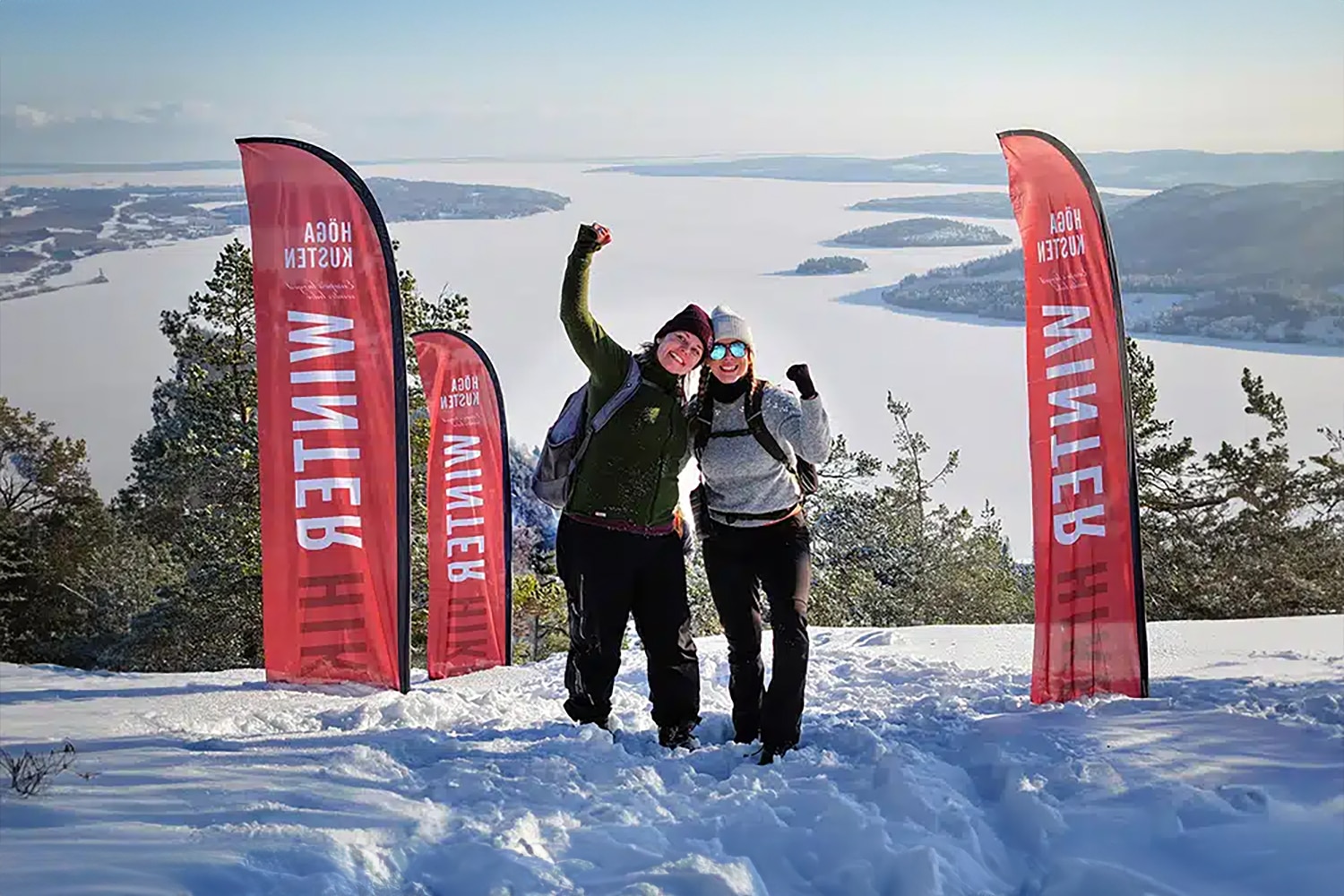
After the days out on the trail, the finish awaits at the top of the High Coast World Heritage Site. Here, at Skuleberget Top Cabin, the views, relief and joy all come together – and the celebration often starts before you have even taken off your backpack.

Saturday evening ends with After Hike at Vardagsrummet in FriluftsByn. After the days out on the trail, we come together to share stories, enjoy good food and live music, and celebrate that special feeling of having completed the whole adventure.
An Adventure to Experience – At Least Once
Winter hiking is something truly special. The silence between the trees. Snow softening every sound. Cold air on your face. The tracks from your snowshoes stretching out behind you. And that feeling when you reach higher ground and see the white mountains and frozen bays of the High Coast opening up in front of you.
During the High Coast Winter Hike, you get to experience one of Sweden’s most beautiful natural areas together with both curious beginners and experienced adventurers.
The days are filled with spectacular views, snowshoeing, campfires, new experiences and that special sense of community that grows when people share something memorable together. In the evenings, we gather, talk about the day, warm up and get ready for the next stage. And when the adventure is over, we finish together with After Hike at FriluftsByn.
For many, it becomes an experience they carry with them for a long time. For quite a few, it also becomes the start of a new winter tradition. Perhaps that is one of the best things about the High Coast Winter Hike – you come for the adventure, and often leave already wanting to experience it again.
HIGH COAST WINTER HIKE
6 TIPS FOR YOUR FIRST WINTER HIKE
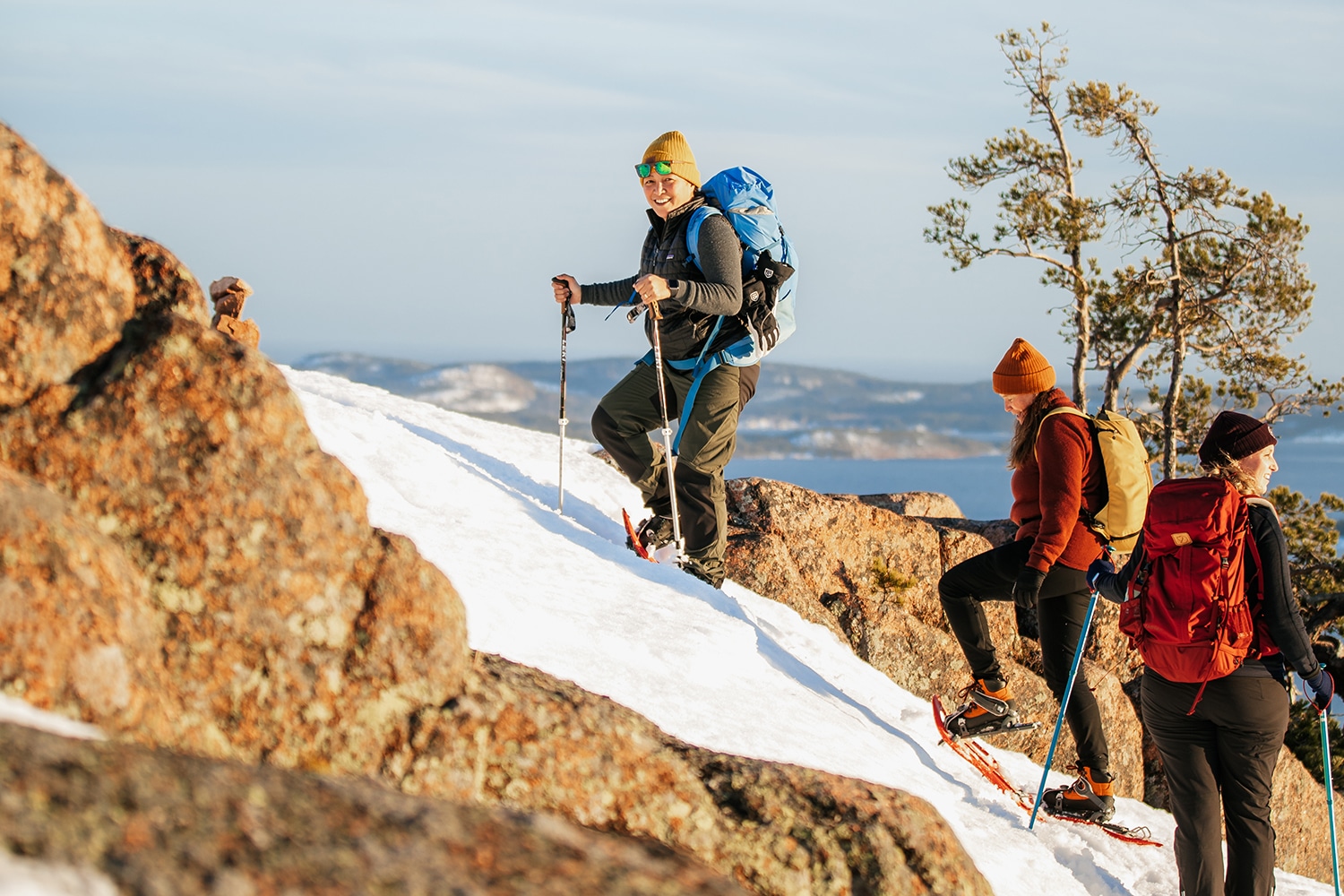
1. DRESS IN LAYERS
Wear wool next to your skin, add a warm mid-layer and finish with a shell that protects against wind and snow. That way, you can easily add or remove layers as the temperature and your level of activity change.
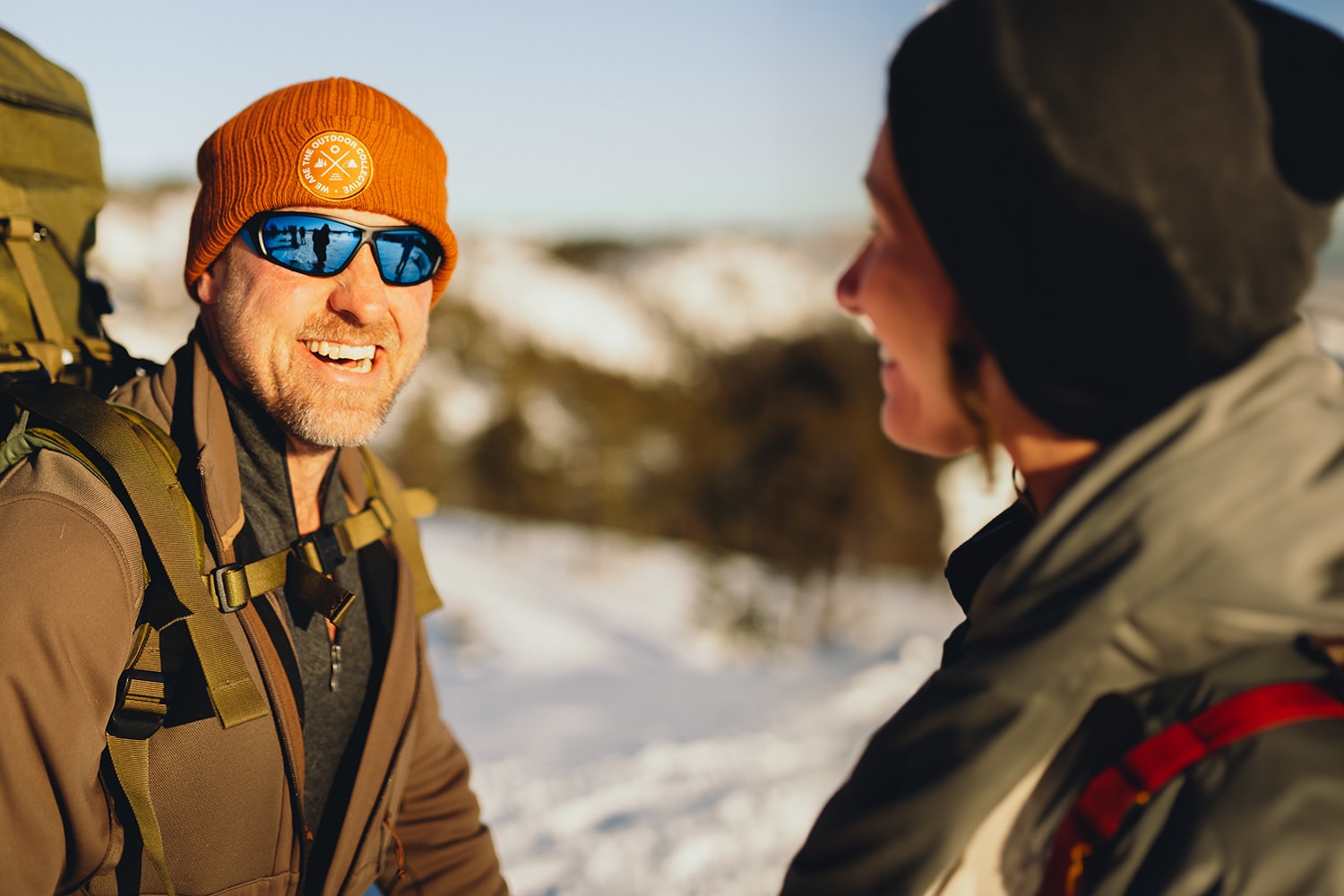
2. VENTILATE EARLY
It is easy to get too warm when the trail climbs. Open your jacket and let some heat out before you start sweating – it is much easier to stay warm when your clothes stay dry.
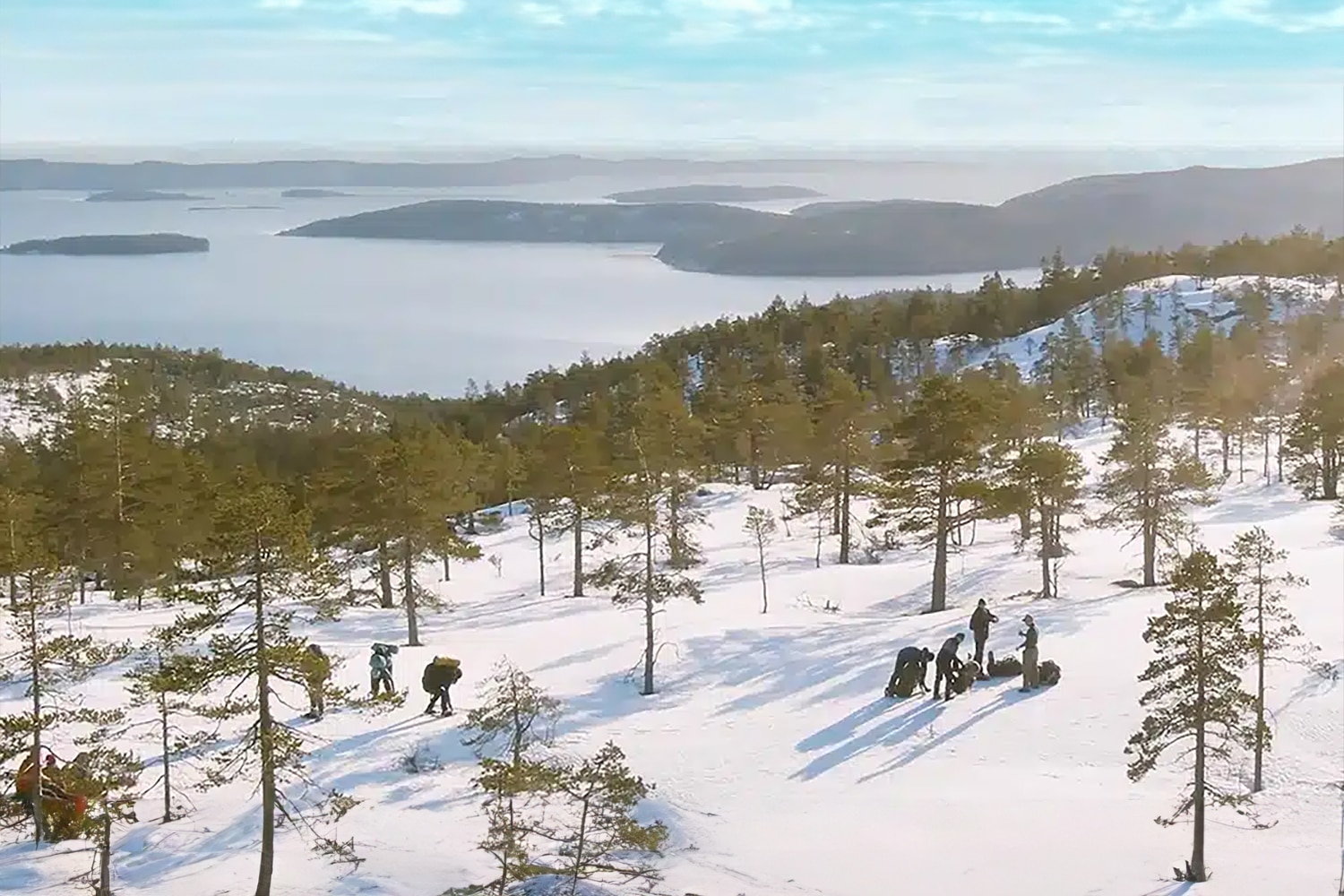
3. KEEP AN INSULATING JACKET CLOSE AT HAND
As soon as you stop, your body starts to cool down. Keep a warm down or synthetic jacket easy to reach so you can quickly pull it on over your shell during breaks.
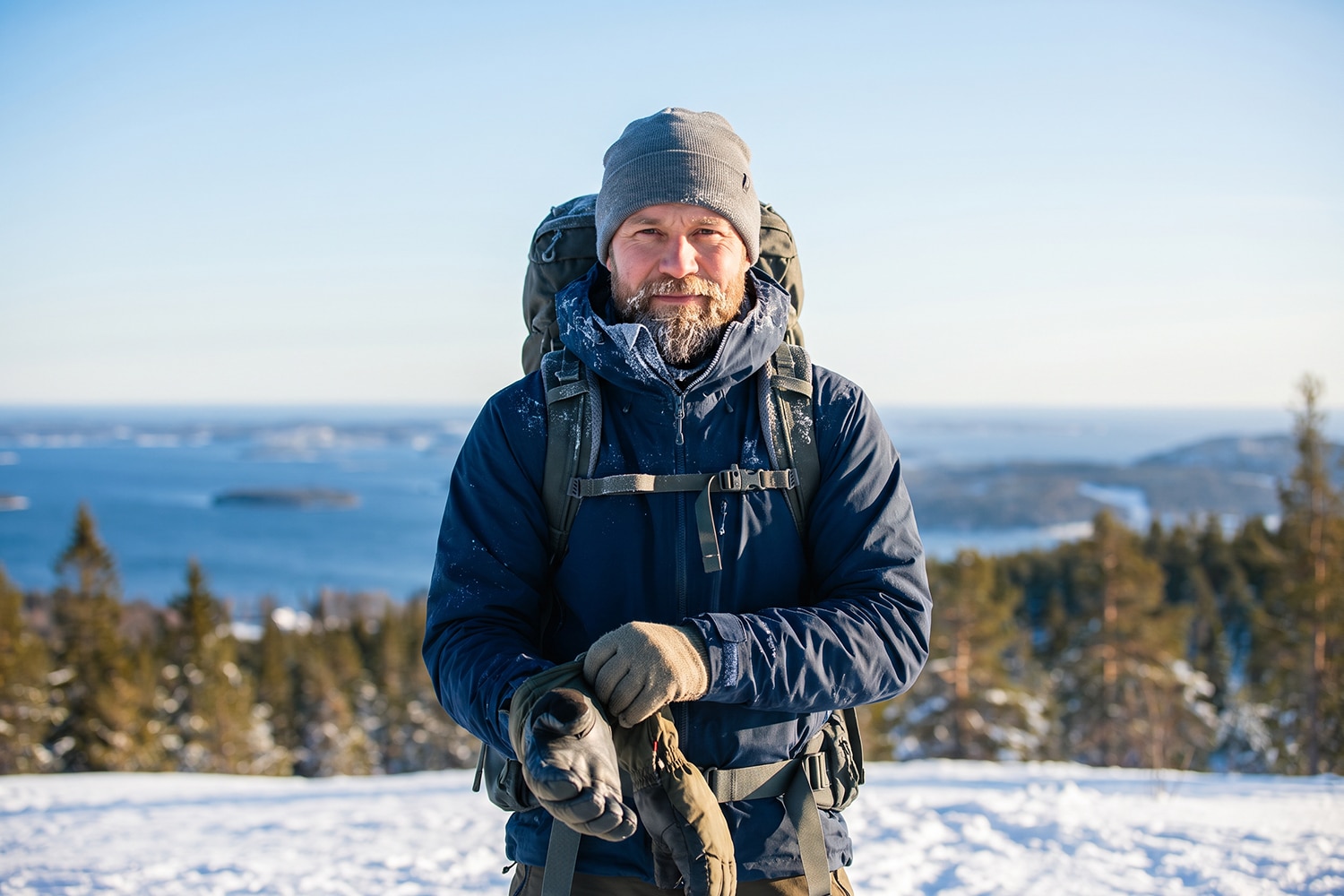
4. TAKE CARE OF YOUR HANDS
Wear thin liner gloves under your warmer gloves so you never have to expose bare hands to the cold. Also bring a hat and something to protect your neck and face when the wind picks up.
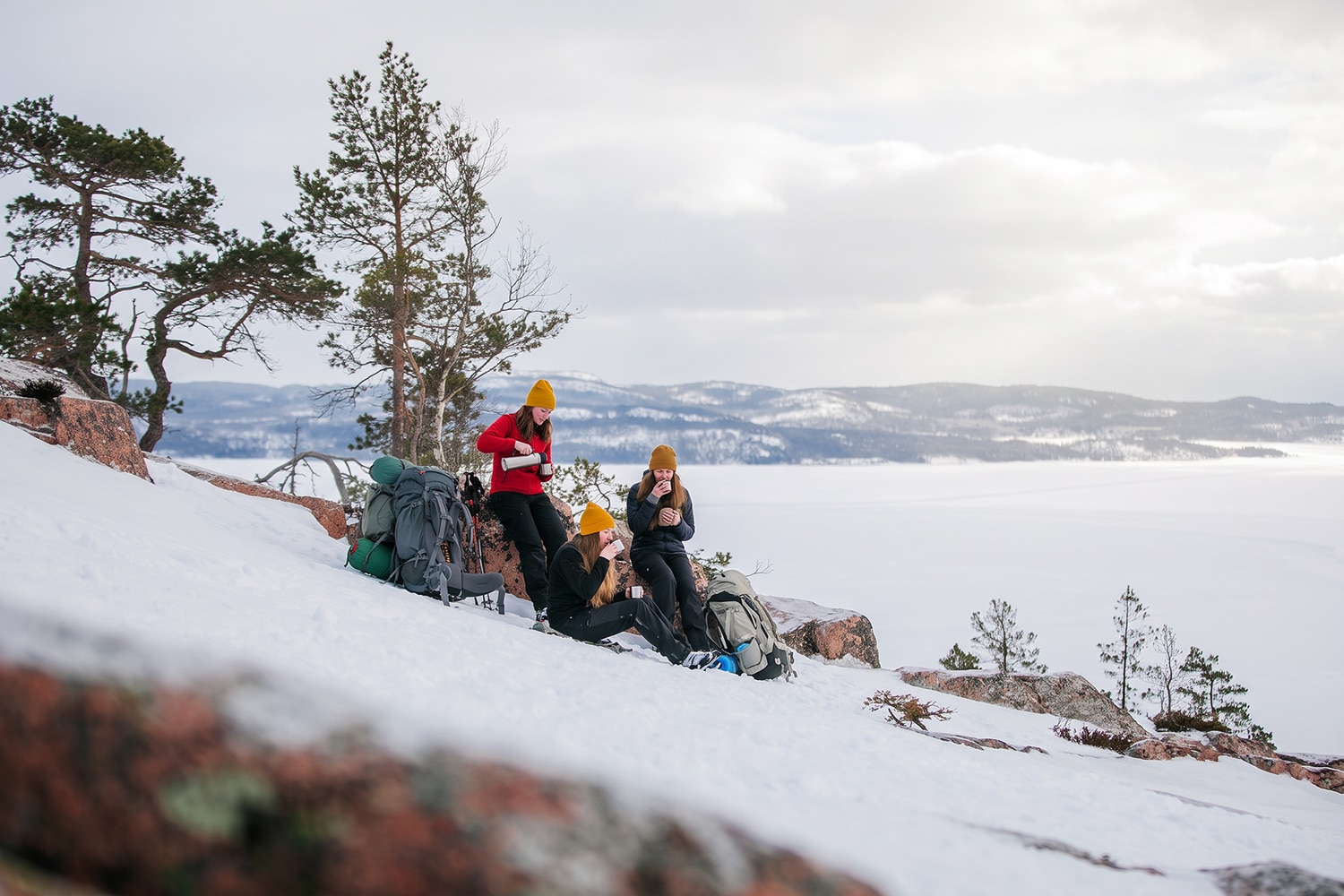
5. BRING A HOT DRINK AND EXTRA ENERGY
A thermos with something warm and a few easy-to-reach snacks make every break both more enjoyable and more comfortable. Top up your energy regularly – before you feel like you really need it.

6. DON’T MISS THE AFTER HIKE
The adventure is not really over until we have celebrated it together. At the After Hike in FriluftsByn, good food, live music and the chance to share stories from the day await everyone who has been out on the trails.