
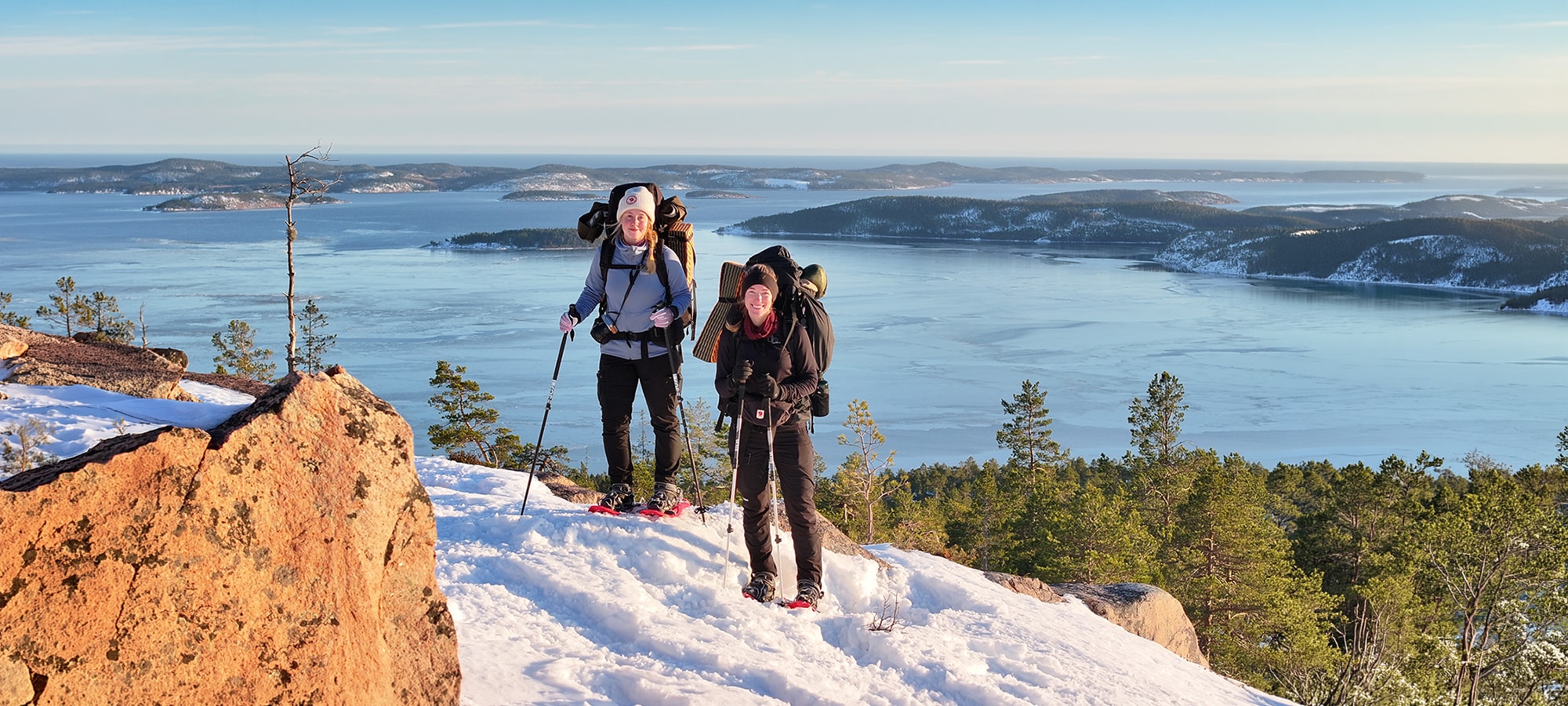
The High Coast – Sweden’s Best Destination for Snowshoeing
Dramatic mountains, deep forests and a shimmering winter coastline.
Dramatic coastal mountains, deep snow-covered forests and a shimmering winter coastline. In Sweden’s High Coast, some of the country’s most beautiful winter landscapes meet hilly terrain that is perfect for snowshoeing and winter hiking. Add easily accessible summit hikes and vast natural areas where silence still has room to breathe, and it is easy to understand why we consider the High Coast one of Sweden’s best destinations for snowshoeing.
The High Coast – Made for Snowshoeing and Winter Hiking
Dramatic coastal mountains, deep snow-covered forests and a shimmering winter coastline. The High Coast is one of Sweden’s best destinations for snowshoeing – and for good reason. The terrain is hilly enough that snowshoes are often the best way to get around, while relatively short hikes can still take you to spectacular viewpoints.
Add the unique combination of mountains, forests and coastline, together with vast natural areas with little motor traffic, and you have a winter landscape that feels almost made for snowshoeing.
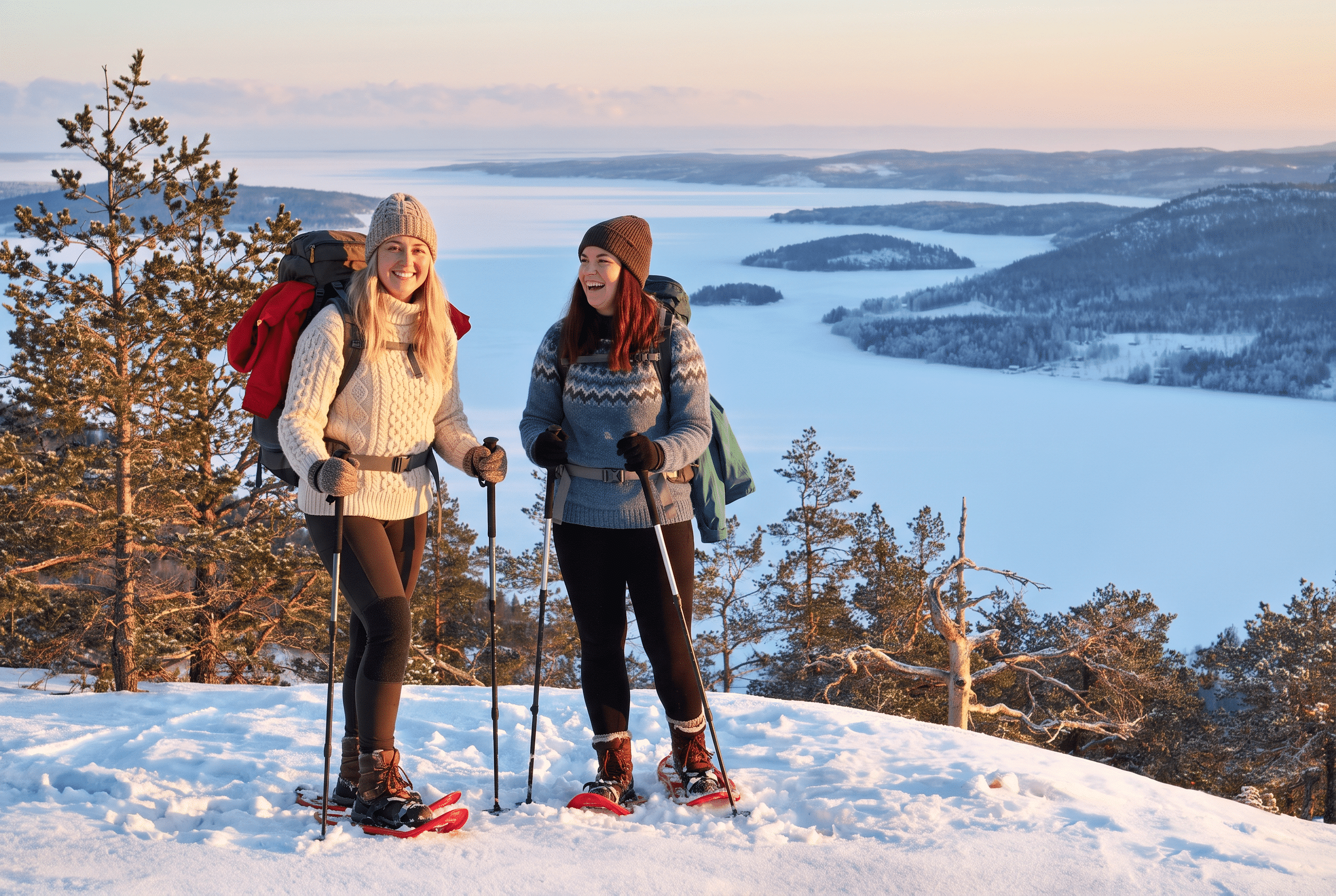
The High Coast is probably Sweden’s best destination for snowshoeing and winter hiking. View from the summit of Skuleberget.
A Landscape Made for Snowshoeing and Winter Hiking
At many winter destinations, backcountry skis are the natural way to get around. In the High Coast, the terrain is different.
Here, the landscape is steeper, hillier and more varied. Trails lead through forests, across rocky ground, up coastal mountains and through areas shaped by boulders and deep ravines.
It is exactly the kind of terrain where snowshoes come into their own. They make it easier to move through deep snow, between trees and up slopes where backcountry skis can quickly become awkward. In Skuleskogen National Park, the terrain is so steep and rugged that snowshoeing is often the most natural way to explore the area in winter.
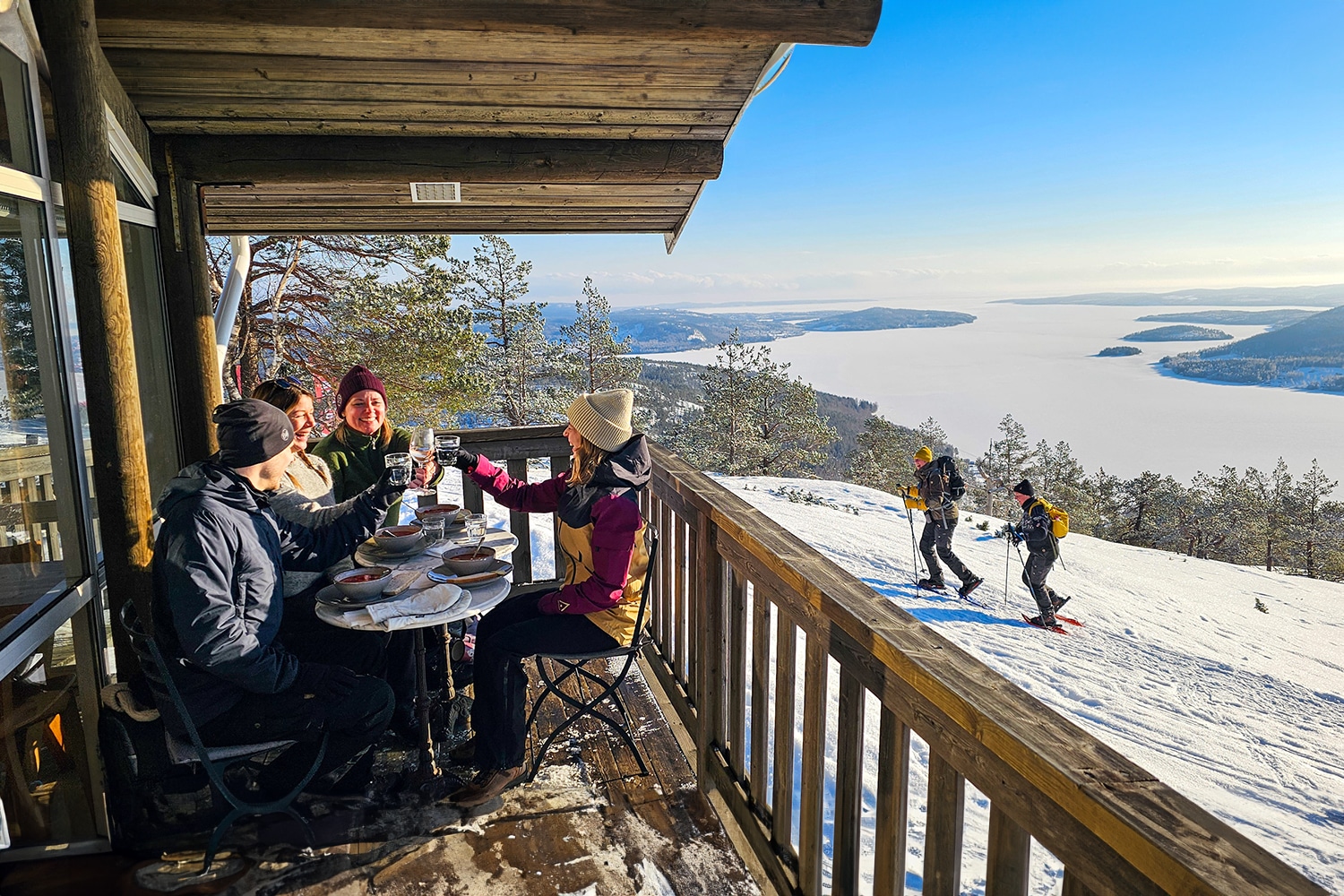
Dramatic coastal mountains, deep forests and a shimmering coastline. Cosy cafés and popular restaurants. The High Coast World Heritage Site offers a wonderful mix of nature, outdoor adventures, food and memorable experiences.
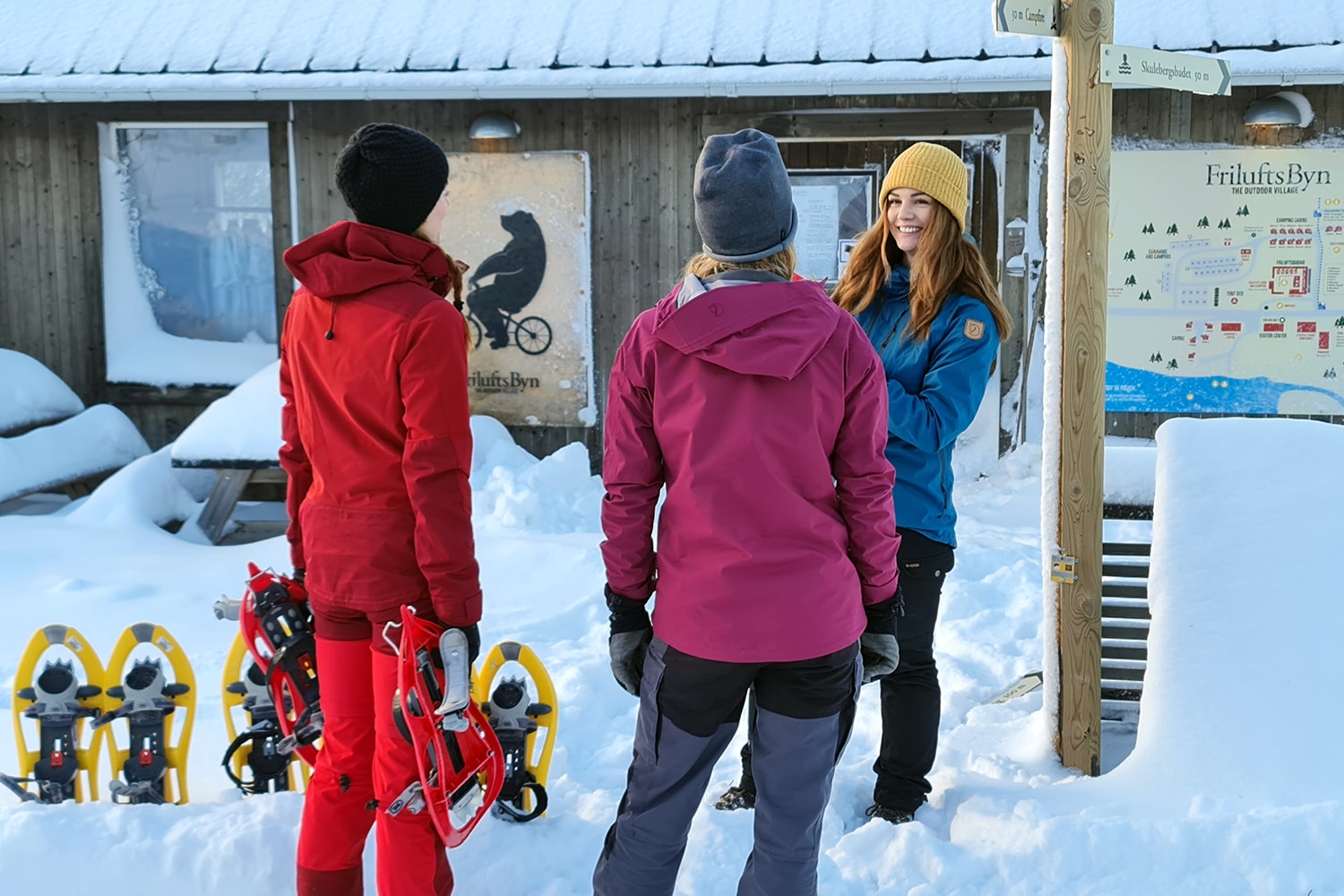
Need snowshoes? During winter, you can rent snowshoes at FriluftsByn and head out to explore the High Coast on your own.
Dramatic Mountains, Deep Forests and a Shimmering Coast
What really sets snowshoeing in the High Coast apart from many other winter destinations is the variety of the landscape. Here, coastal mountains, deep forests and the sea come together in a unique combination.
One moment you are walking among snow-covered spruce and pine trees. A little later, you reach the top of a coastal mountain and look out across the archipelago, frozen bays and a horizon that seems to stretch forever.
It was this combination of mountains, forests, coastline and archipelago that helped the High Coast earn recognition as home to some of Sweden’s most beautiful nature. In winter, the contrasts become even more striking.
Snow softens the sounds of the forest. Light reflects across the sea and ice. And when you reach the higher ground, the landscape opens up into a vast winter panorama that feels far bigger than the distance you have actually walked.
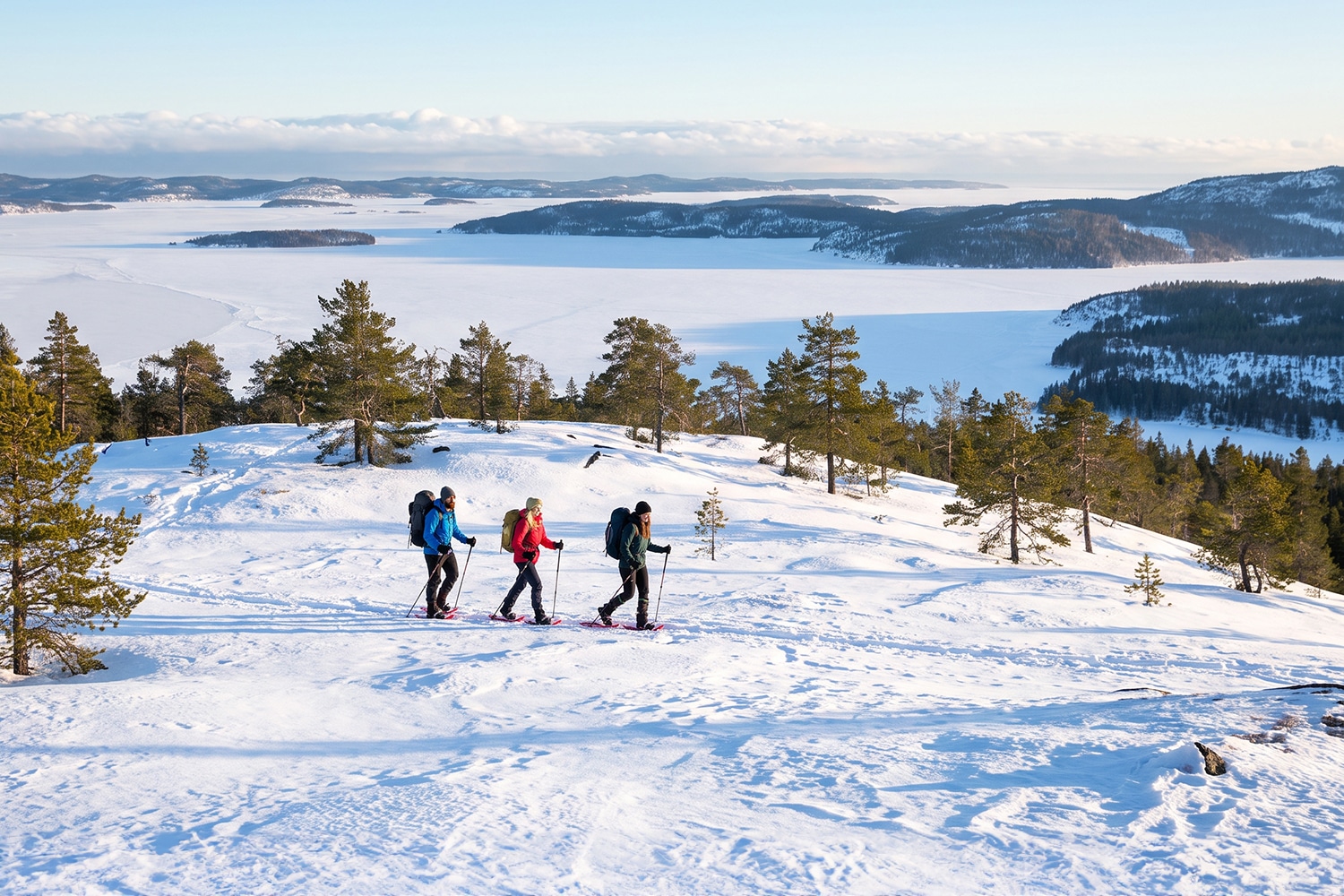
One of the great strengths of the High Coast is how quickly you can reach truly spectacular nature. It makes adventures in the World Heritage Site accessible even to curious beginners.
Spectacular Views Within Easy Reach
One of the great advantages of the High Coast is how quickly you can reach spectacular viewpoints. A winter adventure here does not have to be long to feel big.
On relatively short winter hikes, you can make your way from snow-covered forests to open coastal mountains with sweeping views across the sea, archipelago and the High Coast World Heritage Site.
At Skuleberget, the High Coast Trail is approximately 2.5 kilometres to the summit. It is a manageable hike that rewards you with some of the most spectacular winter views in the World Heritage Site.
Getsvedjeberget is an even shorter hike, although considerably steeper, and offers equally impressive views across the coastal landscape.
This makes the High Coast perfect for anyone looking to fill a winter weekend with several different adventures – letting the weather, snow conditions and how you feel on the day decide how far you want to go.
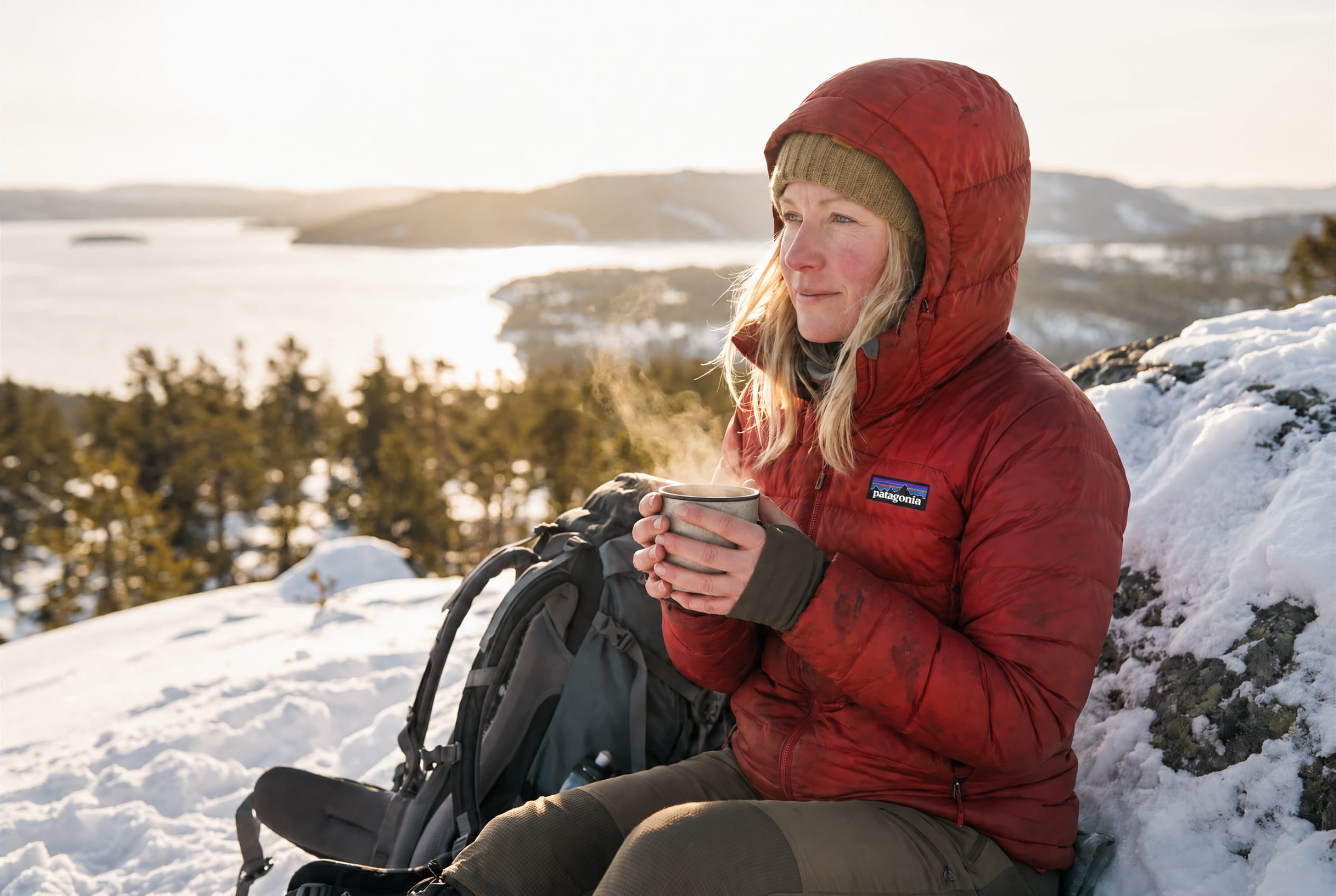
Skuleberget och Skuleskogen är fria från skoterleder vilket gör att det blir en tystare upplevelse.
Silence Is Part of the Experience
Snowshoeing is not only about getting somewhere. It is also about what happens when you stop.
Both Skuleberget and Skuleskogen National Park include protected natural areas where snowmobiles are not allowed. That means winter can feel almost unusually quiet. You hear the snow beneath your snowshoes. The wind in the trees. Perhaps a raven somewhere in the distance.
And when you stop, pour a cup from your thermos and watch the steam disappear into the cold winter air, it is often the silence you notice most. It is a surprisingly big part of the experience.
Skuleberget – The Natural Choice for Snowshoeing
If you want to visit the High Coast and go snowshoeing on your own, Skuleberget is the natural place to start.
From FriluftsByn, follow the High Coast Trail, part of the longer High Coast Trail network, for around 2.5 kilometres to the summit of Skuleberget. It is the only winter-marked trail in the High Coast, with poles that remain visible even when the snow is deep, guiding you towards some of the most spectacular views in the World Heritage Site.
At the top, you can warm up and refuel at Skuleberget Top Cabin, with some of Sweden’s most beautiful views just outside the windows.
When the cable car is running, many people choose to hike up and ride down. From the lower station, it is only about 600 metres back to FriluftsByn.
That makes Skuleberget a perfect winter day hike: snowshoeing, big views, something warm at the summit and an easy way back down.
After a fresh snowfall, snowshoes are ideal. If plenty of people have already walked the trail, however, the snow may be packed down enough for good winter hiking boots.
First time winter hiking in the High Coast? Start with Skuleberget.
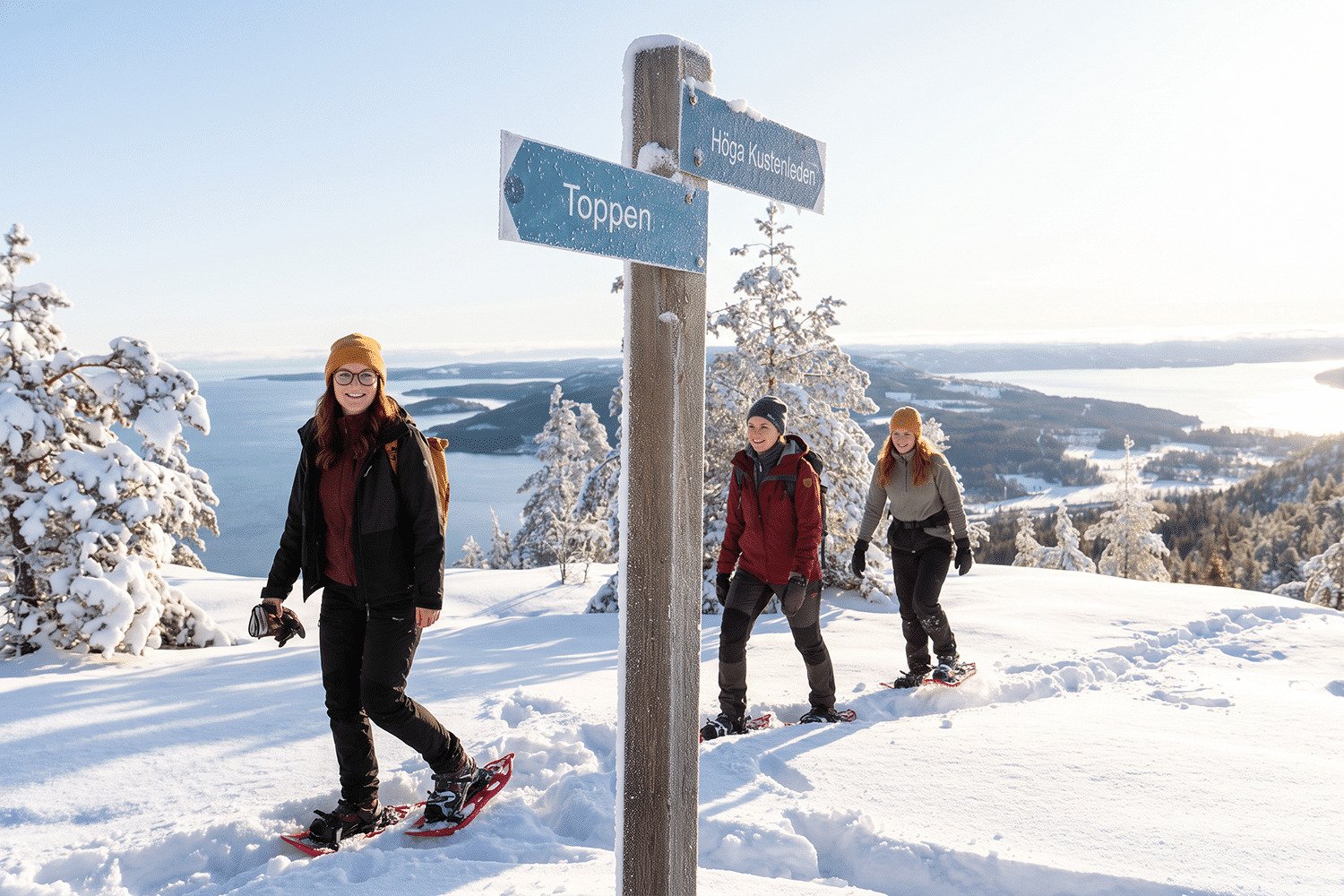
Skuleberget is the natural choice for snowshoeing in the High Coast. It is also home to the region’s only winter-marked trail, making it easy to follow even in deep snow.
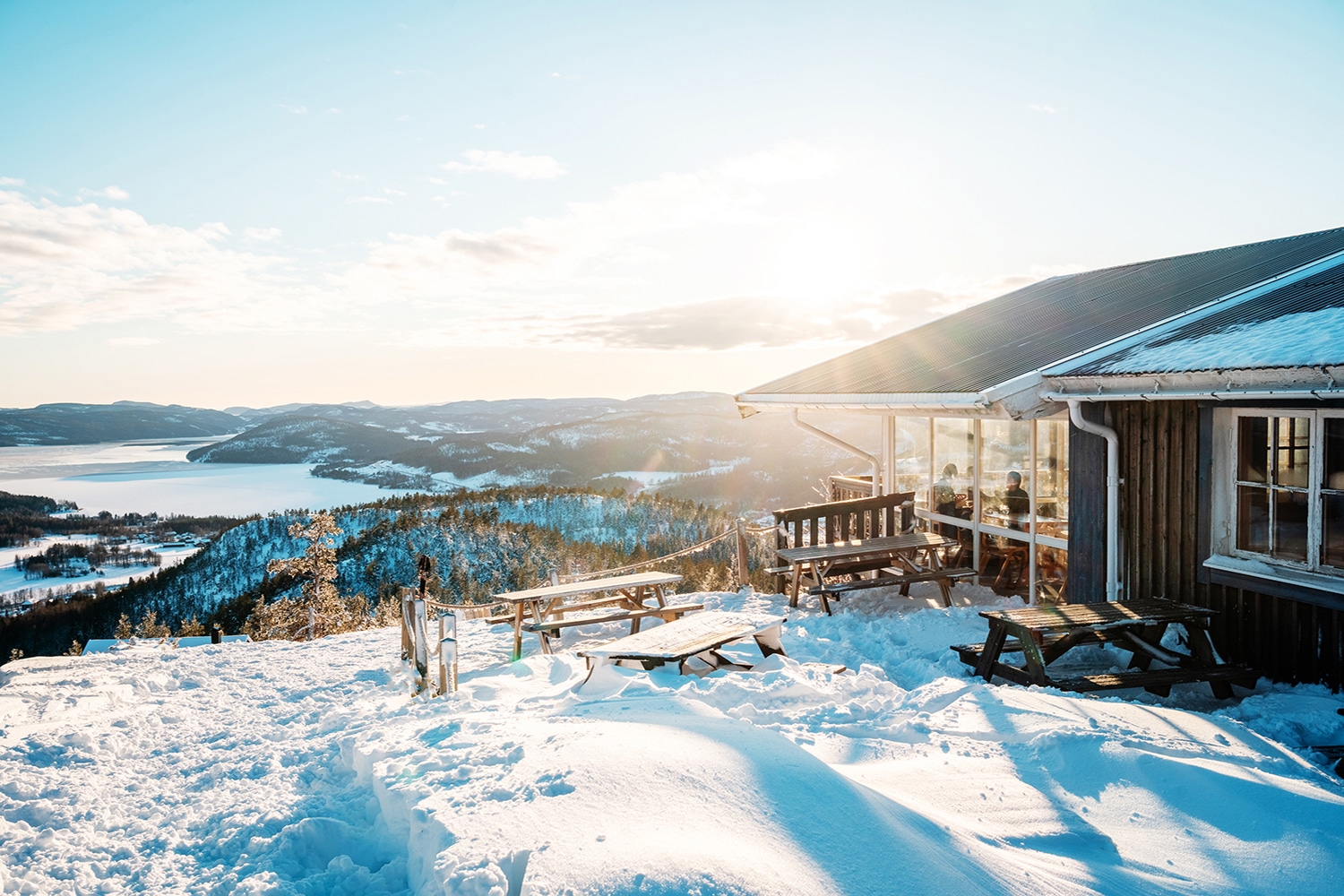
At the top of the World Heritage Site, you will find Skuleberget Top Cabin, serving lunch, waffles and Swedish fika. Many visitors hike to the summit and take the cable car back down.
Play the video to get a feel for what it’s like at the top of the High Coast World Heritage Site.
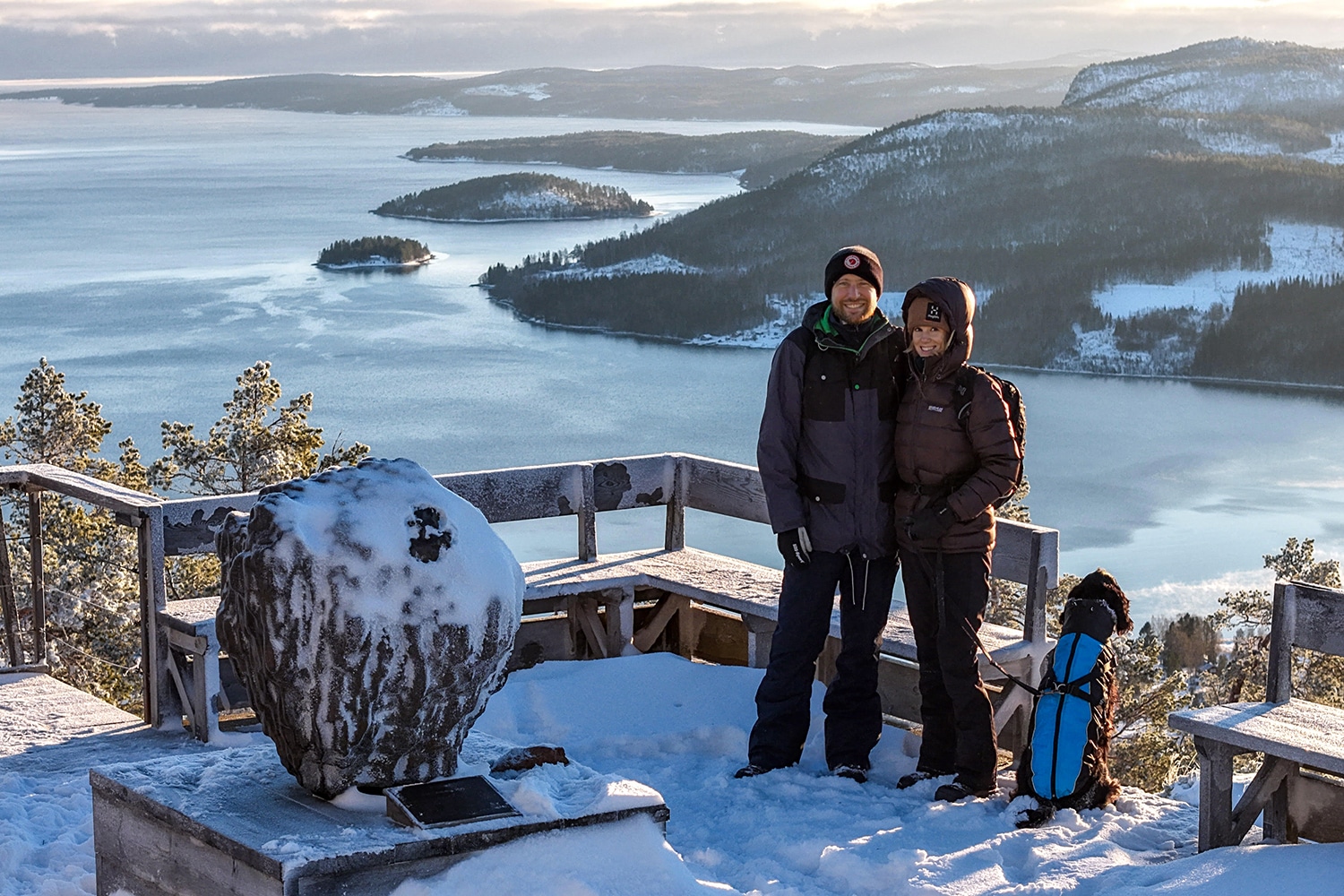
Skuleberget – the top of the High Coast World Heritage Site. In winter, you can also take the cable car to the summit.
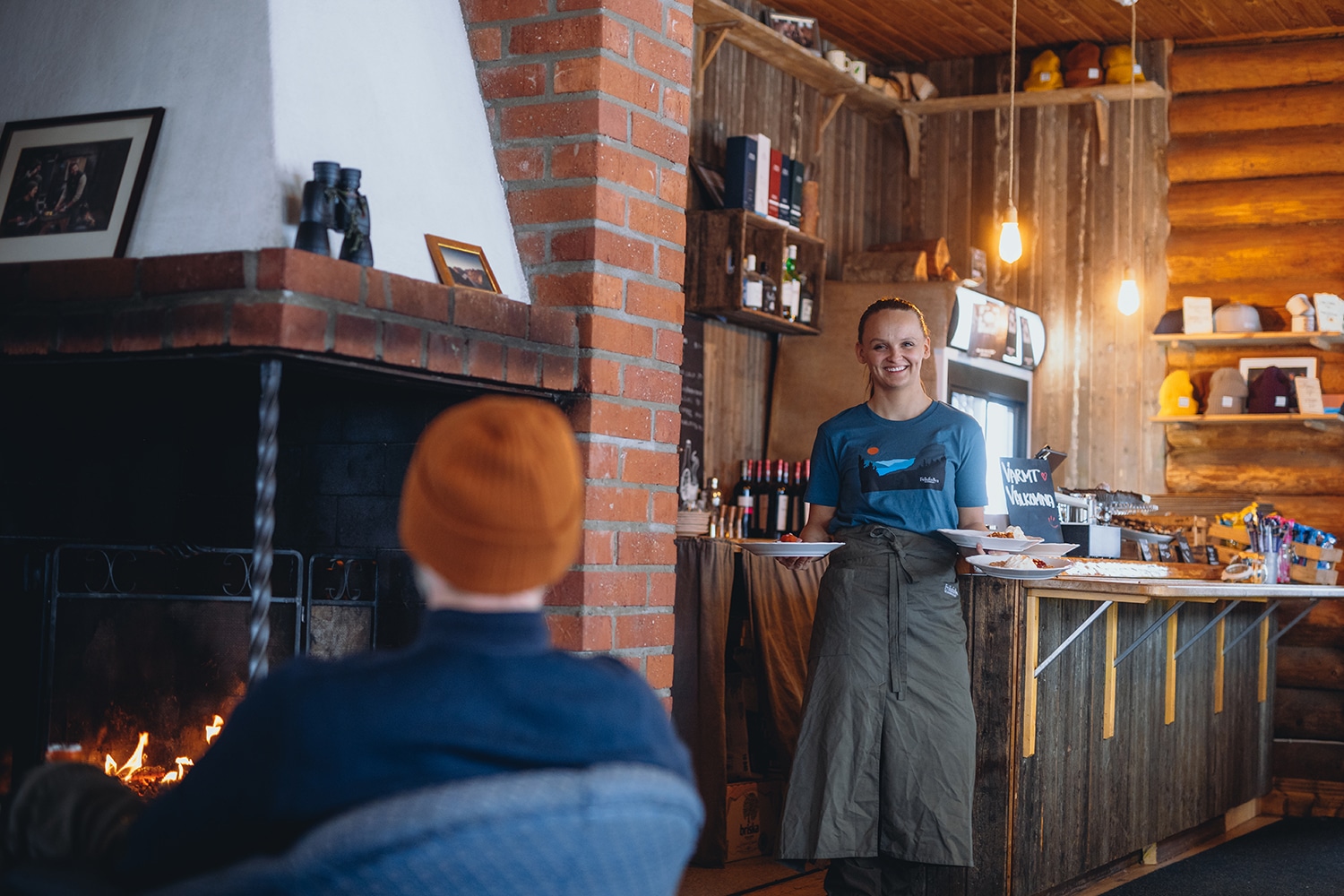
At the top of the High Coast World Heritage Site, you’ll find Skuleberget Top Cabin, serving lunch, waffles and Swedish fika. Many visitors hike up and take the cable car back down.
Skuleskogen National Park
Then there is Skuleskogen. Here, the winter experience immediately feels a little wilder.
The national park is large, hilly and often very snowy, especially in the higher western areas. You will find deep forests, ravines, high ground and some of the most dramatic winter landscapes in the High Coast.
But winter hiking in Skuleskogen also requires a little more experience. Unlike the High Coast Trail on Skuleberget, the trails are not marked specifically for winter. Summer trail markings can disappear beneath the snow or be hidden by snow-covered trees, and after heavy snowfall, existing tracks can quickly vanish.
Later in the winter, often from late February into March, the most popular routes are more likely to be well trodden. Conditions can still change quickly, however. That is part of the appeal, but it also means you need to be able to navigate, allow plenty of time and be prepared to change your plans.
If you are new to winter hiking, it is wise to explore Skuleskogen with someone who knows the area – or experience the national park as part of the High Coast Winter Hike.
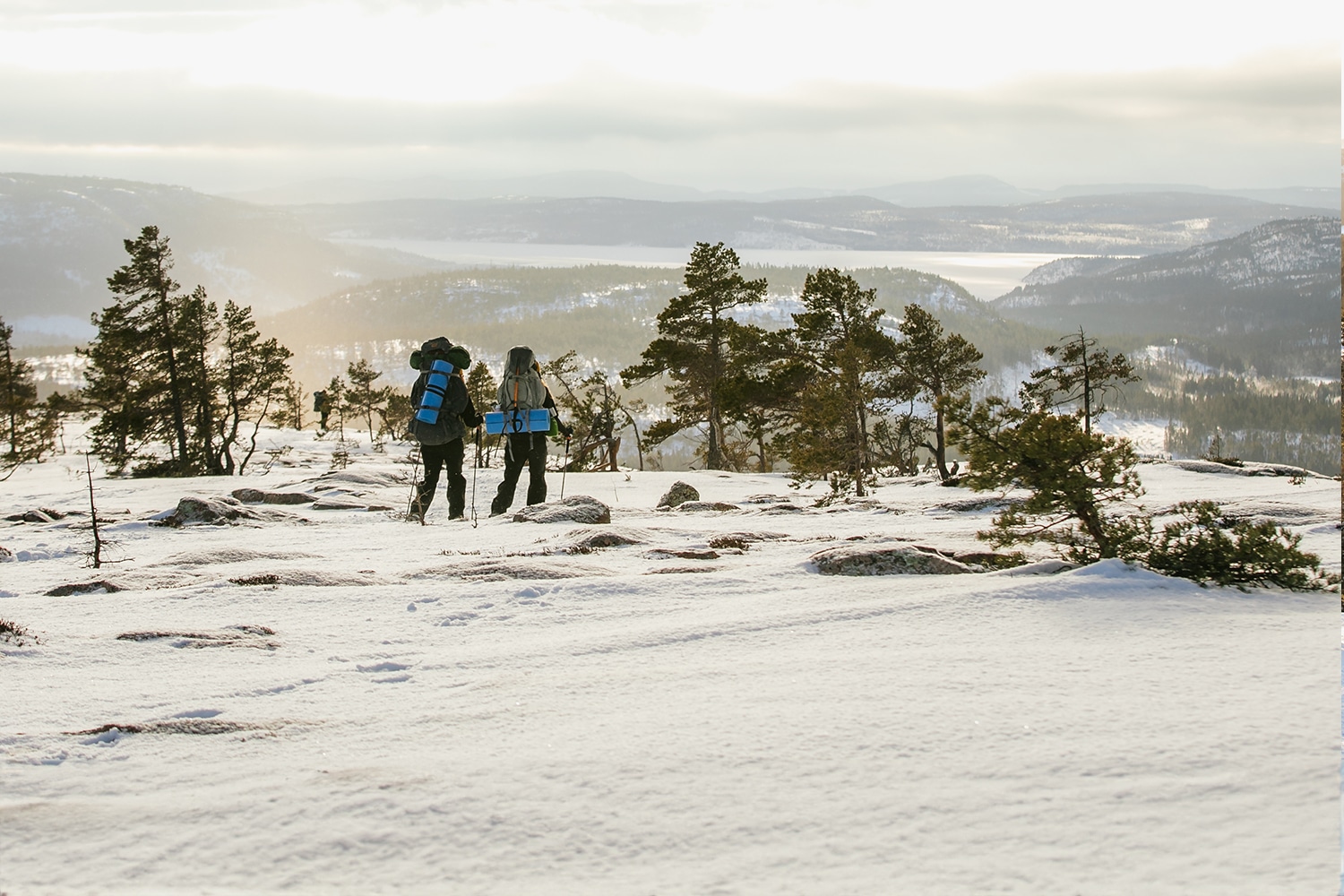
There are no dedicated winter-marked trails in Skuleskogen National Park. In the forested sections, the trail is often relatively easy to follow, but higher up on the mountains, snow can cover the markings painted on exposed rock and the small stone cairns used to mark the route.
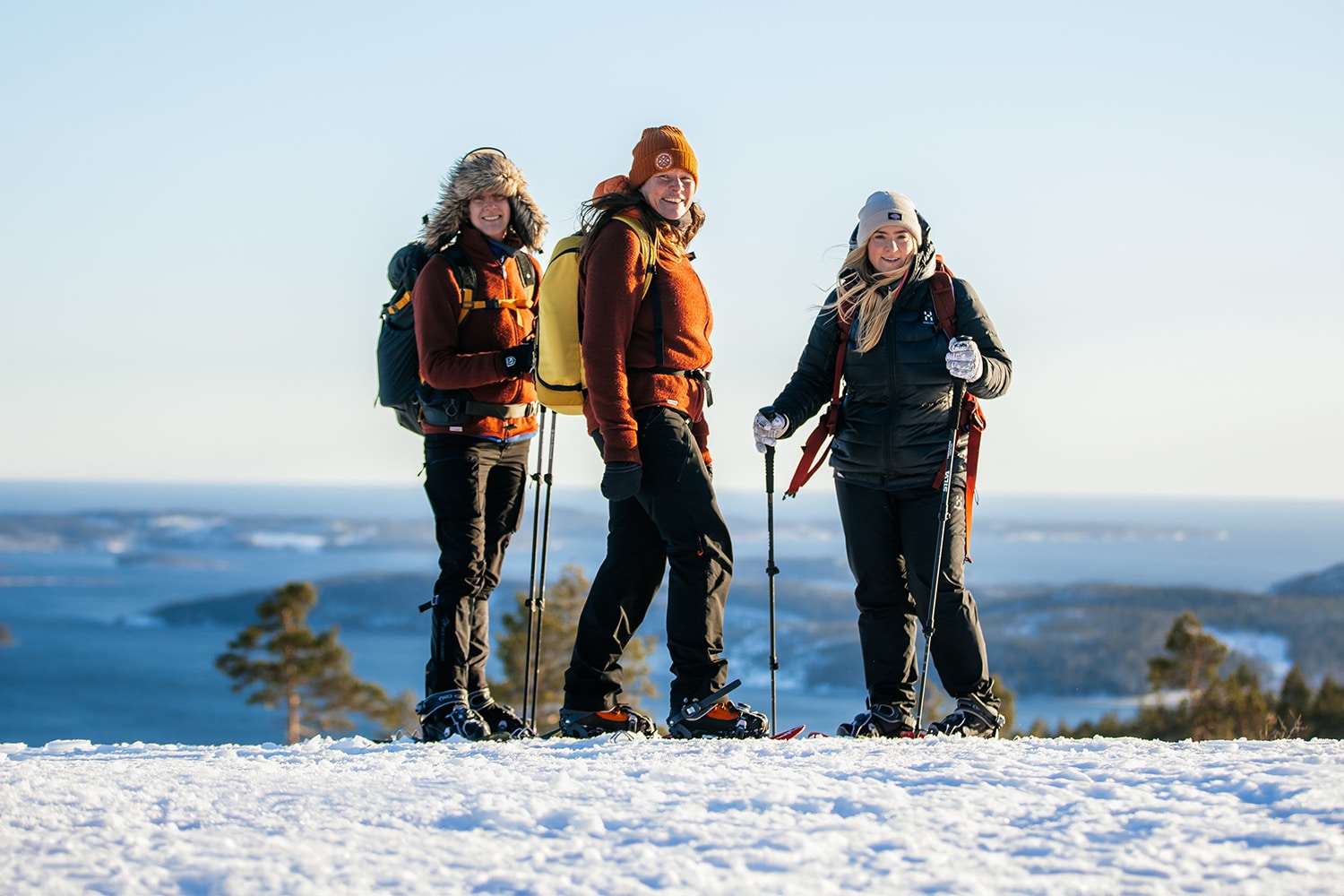
On the exposed higher ground, winter conditions make navigation more demanding. If you plan to hike here on your own, you need to be confident finding your way even when trail markings are buried beneath the snow. That is why many choose to join the High Coast Winter Hike, where experienced guides lead the way through the national park.
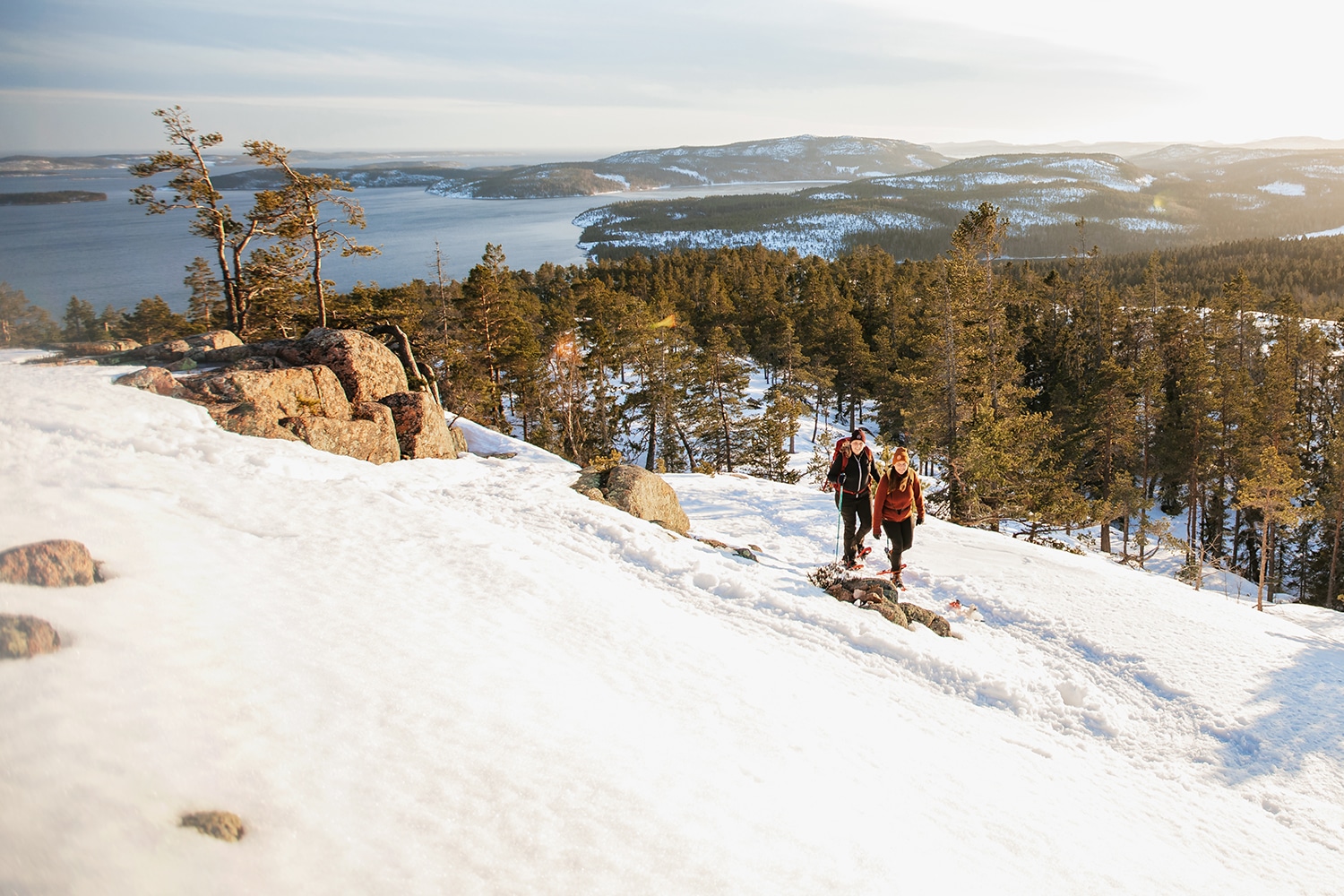
During the High Coast Winter Hike, experienced guides lead the way, find the best route and break trail through the snow. Guides are also stationed at sections where navigation can be more difficult. All so you can focus more on enjoying the hike and the spectacular winter landscape.
More Winter Adventures to Discover
Once you have got a taste for snowshoeing, there is plenty more to explore around Skuleberget.
Getsvedjeberget is a short but steep hike that quickly takes you to one of the most spectacular viewpoints in the High Coast. Herrestaberget is a local favourite, with a route that passes Gällstasjön before climbing to beautiful views over Docksta Valley, Skuleberget and the coastline.
Both hikes are close to FriluftsByn and are perfect for a winter adventure lasting a few hours.
Afterwards, you can round off the day with something good at the Winter Café at FriluftsByn. Check the opening hours before you head out, then finish your hike with a hot drink, one of the popular Swedish semlor, or a favourite lunch – a grilled cheese sandwich with tomato soup.
A really good winter day does not have to be more complicated than that: snowshoes, a summit hike, spectacular views and something warm and delicious when you return.
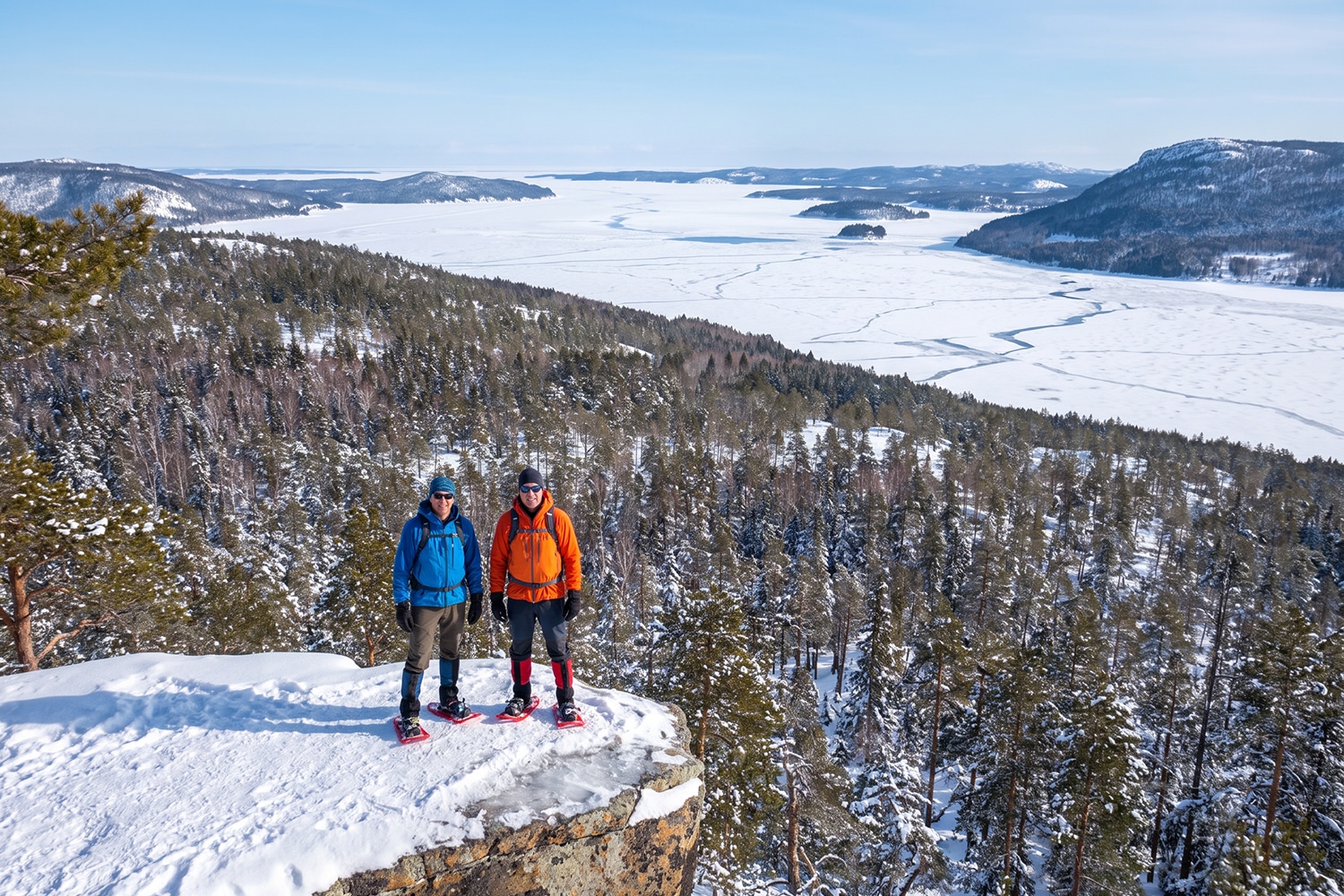
Getsvedjeberget – short, steep and rewarding, with one of the most spectacular views in the High Coast.
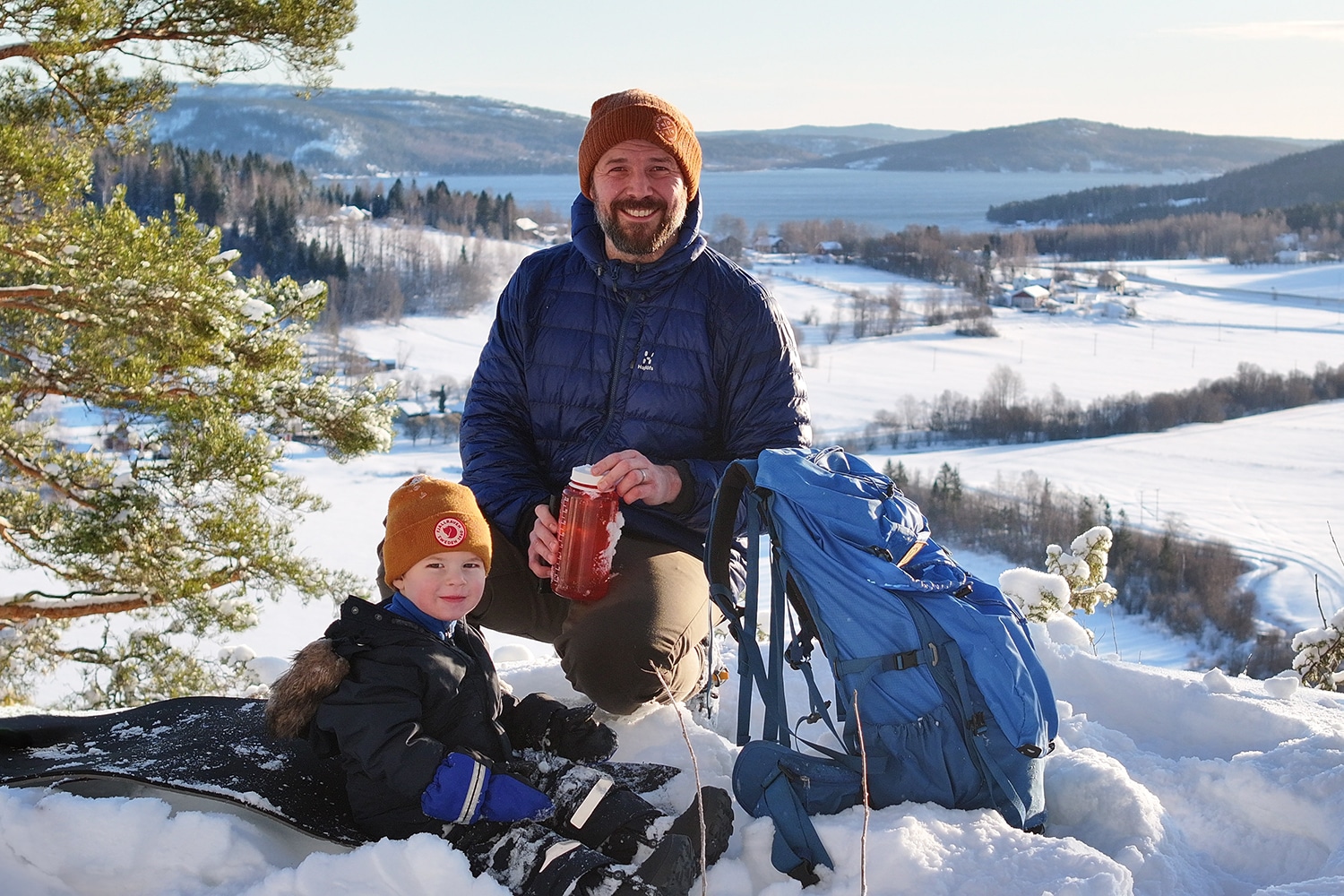
Herrestaberget – a local favourite with views over Docksta Valley, Skuleberget and the surrounding coastal landscape.

The Winter Café at FriluftsByn is something of a gathering place for winter adventures – known for its tasty lunches and popular Swedish semlor.

Extend your winter day with dinner and a relaxed evening at the popular Vardagsrummet restaurant in FriluftsByn.
Want to Really Discover the High Coast in Winter?
Then we think you should join the High Coast Winter Hike.
Although there are places you can explore on your own, there is much more waiting out there: deep forests, high viewpoints and winter routes where snow can cover both trails and markers, and where changing weather can quickly affect the conditions.
During the High Coast Winter Hike, our experienced guides take you to some of the absolute highlights of the World Heritage Site and can adapt each day’s route to the snow, wind and weather. We take care of the navigation through the winter landscape, making it possible even for those with little or no previous winter hiking experience to reach places they might never have explored on their own.
You do not need to worry about which trail is best that day, whether the markings are buried beneath the snow, or what to do if the weather suddenly changes.
It means you can venture further into the landscape that makes the High Coast so special, while knowing that you are surrounded by people who know the area and understand how to adapt the hike to the conditions.
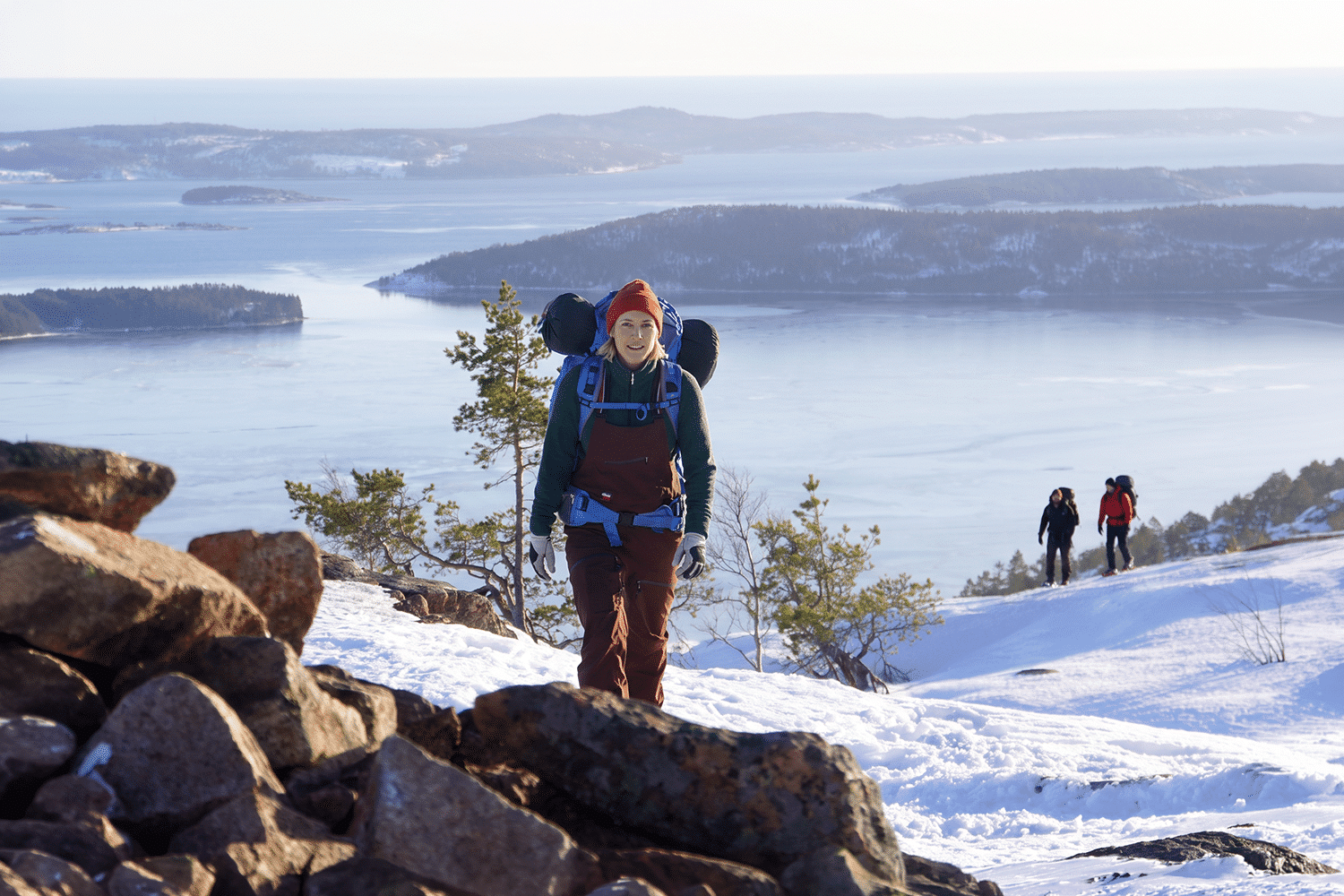
The High Coast Winter Hike attracts both experienced hikers and curious beginners from around the world.
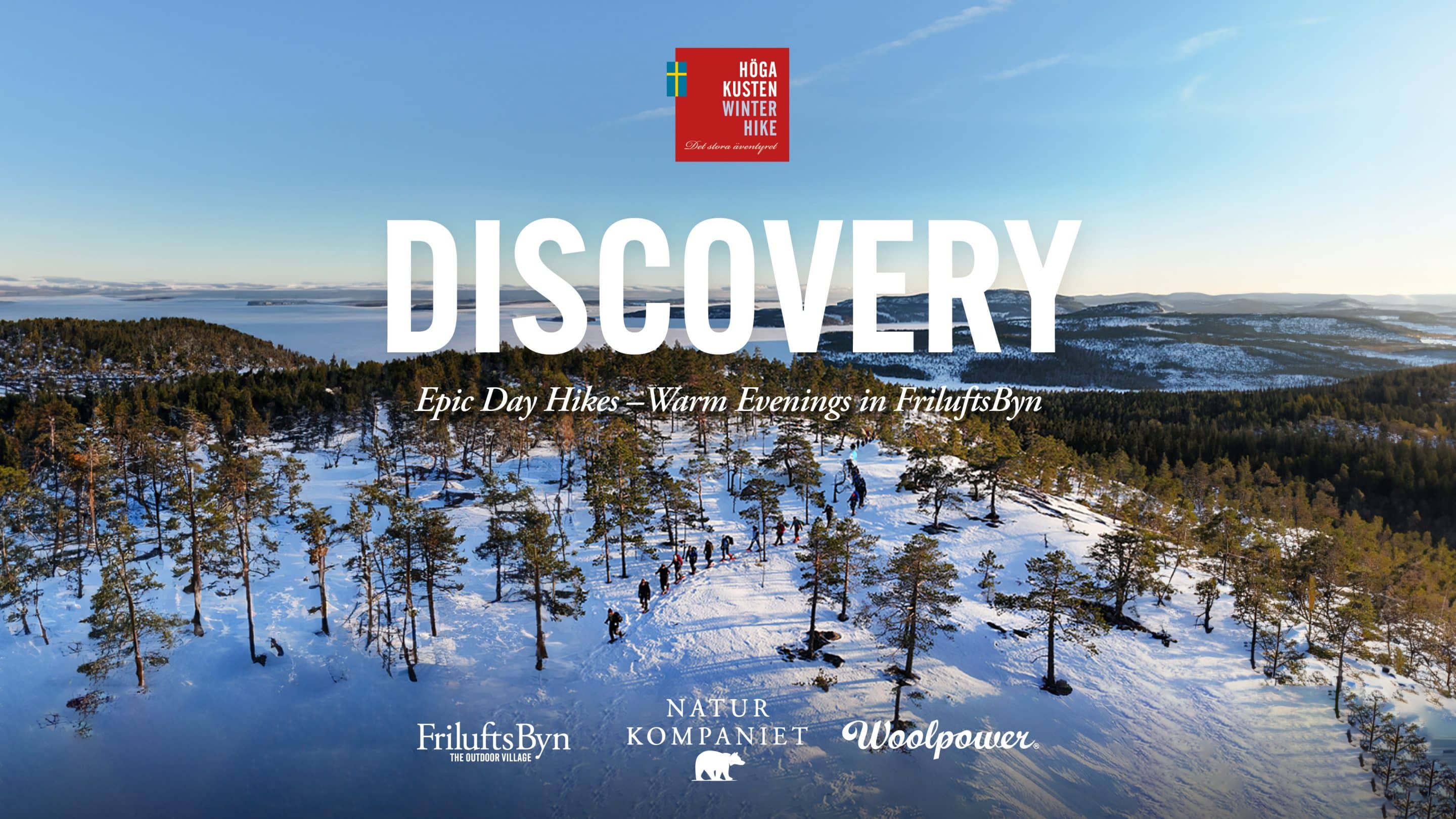
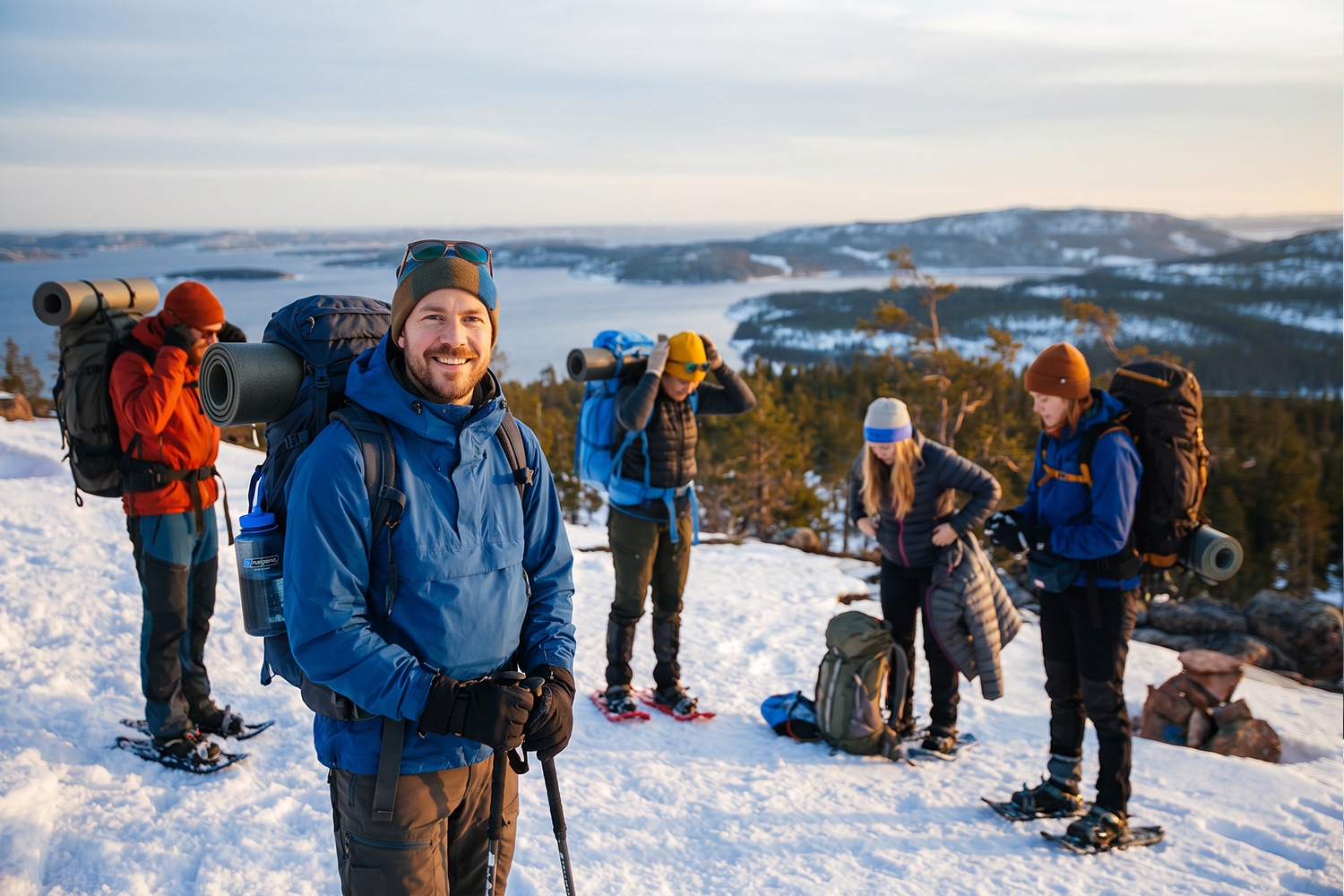
Discovery – spectacular guided day adventures, with a warm cabin at FriluftsByn to return to each evening.
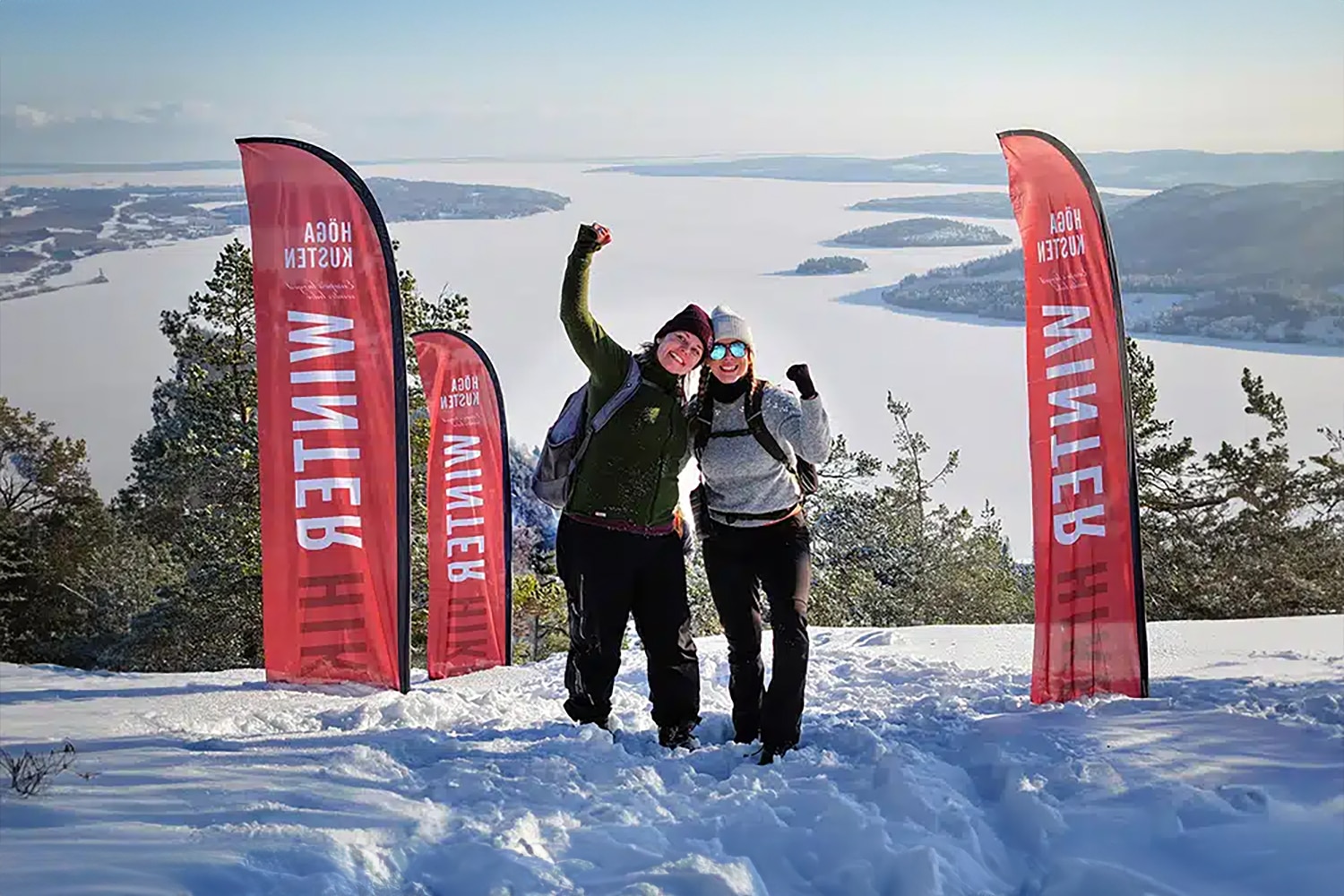
Together, we make our way to some of the absolute highlights of the High Coast.
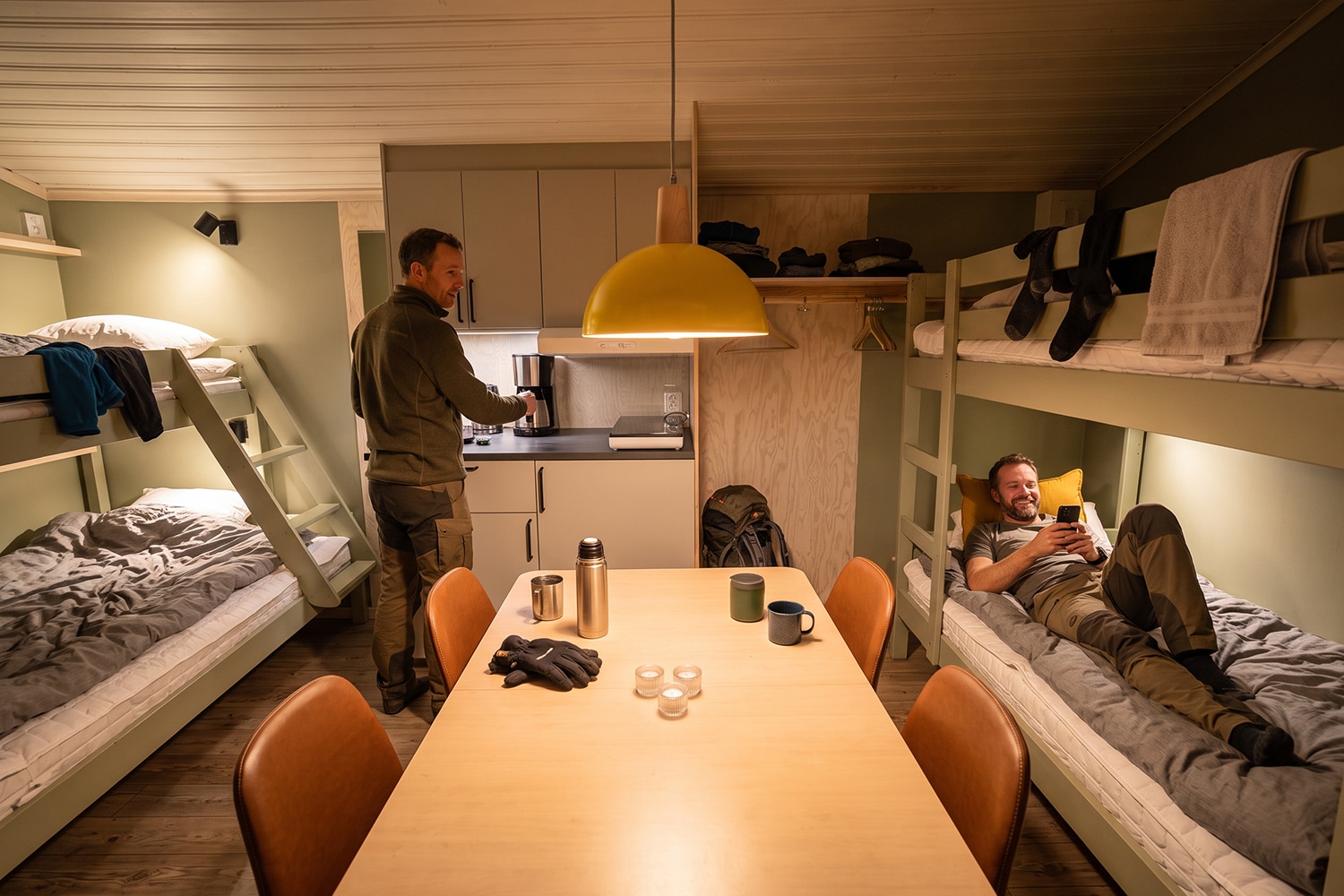
Ready for another day of adventure in the High Coast World Heritage Site.
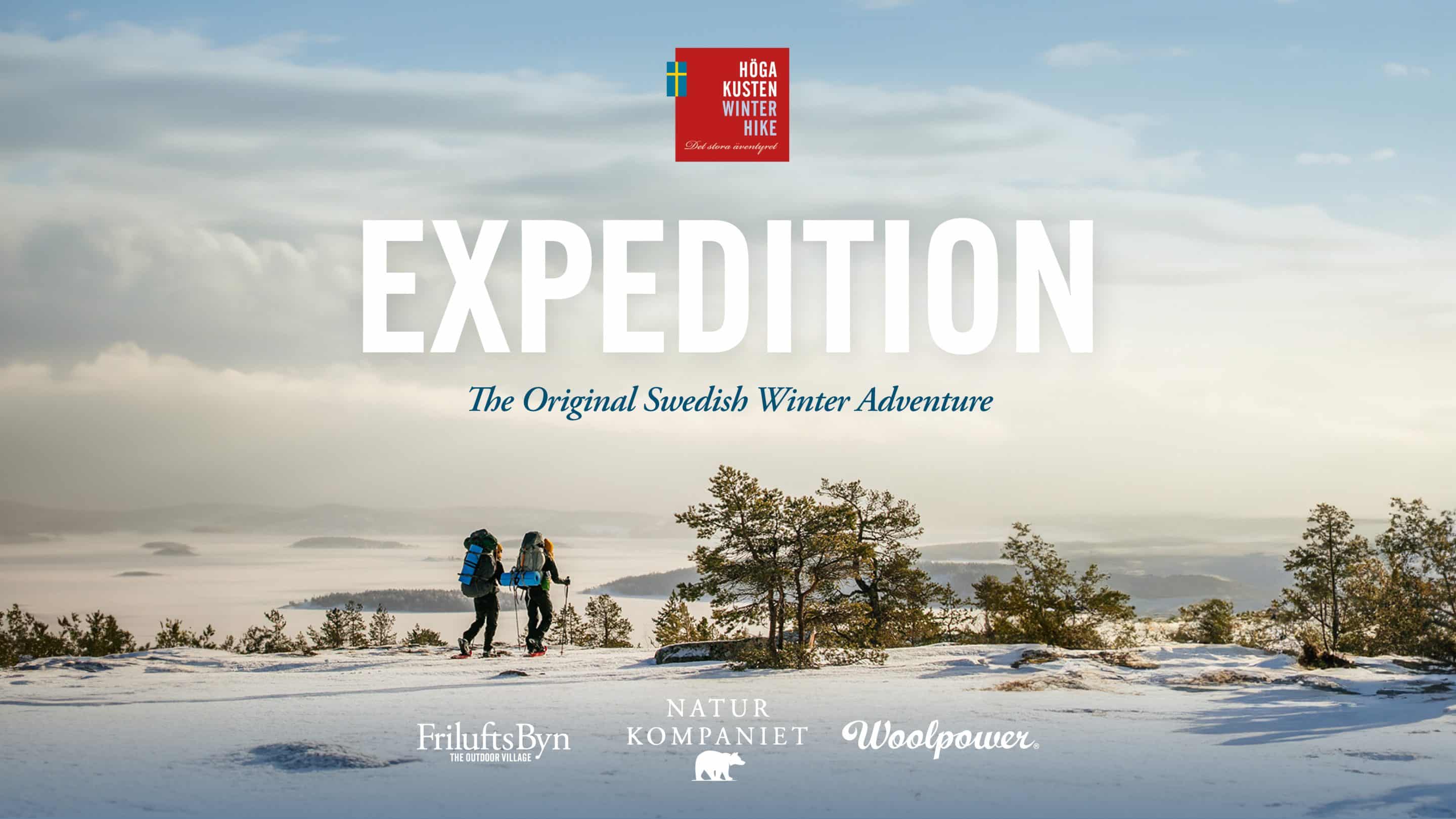
Expedition – hike through some of the High Coast’s greatest highlights and spend two nights together at our shared winter basecamp.
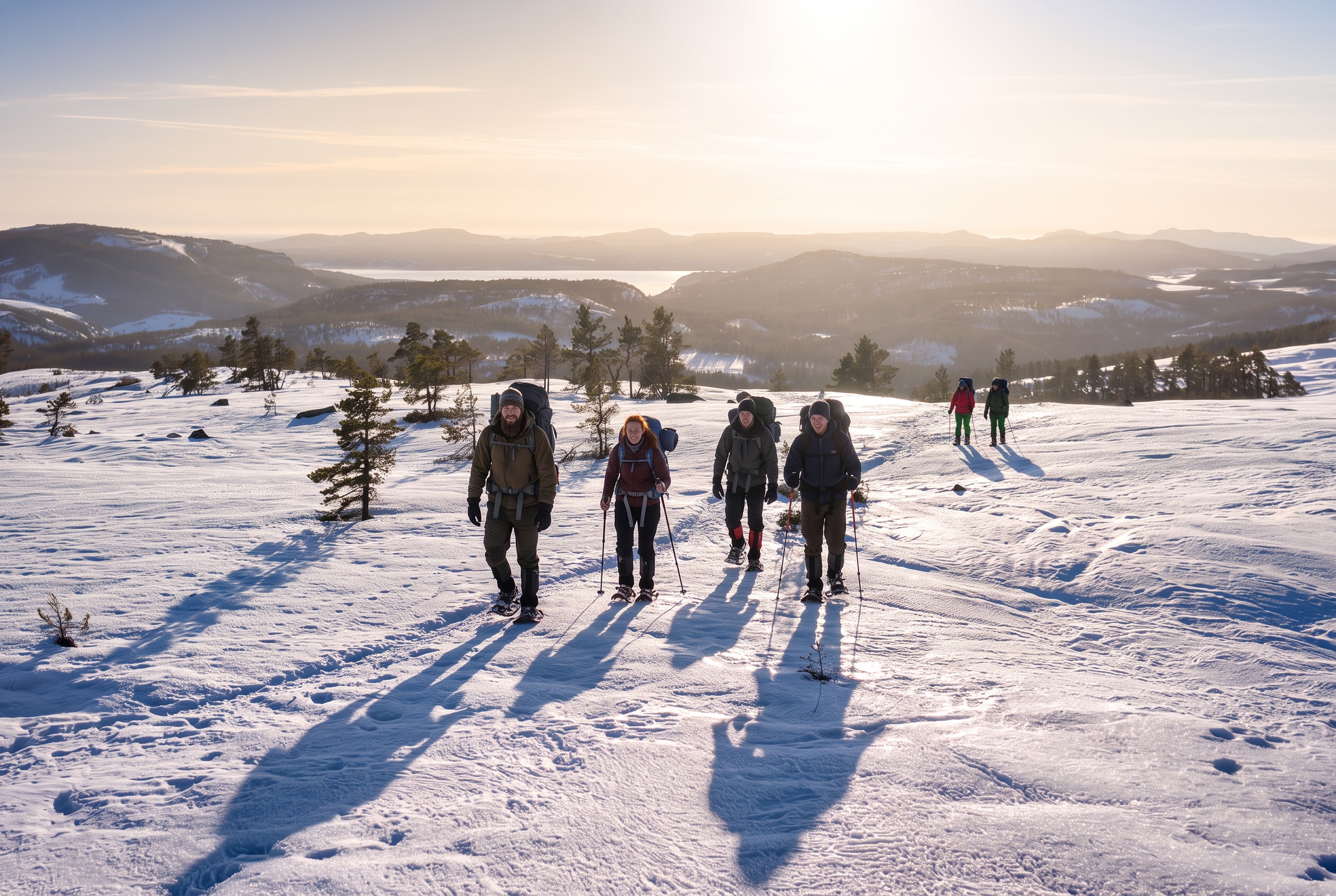
An adventure and a challenge shared with like-minded people from around the world.
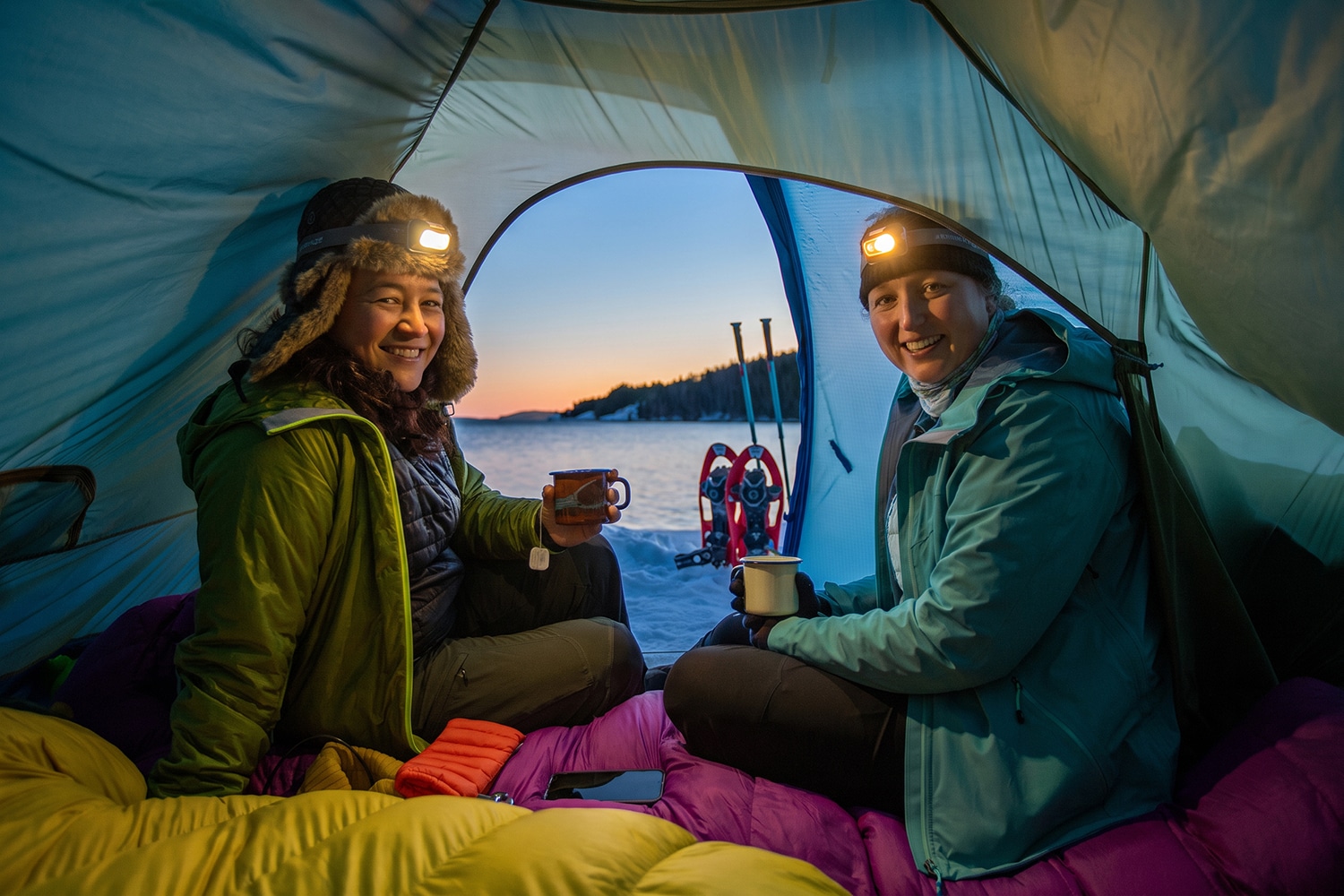
We spend the night at our shared basecamp in the heart of the High Coast World Heritage Site. We take care of transporting your tent and sleeping bag.
High Coast Winter Hike – We Take Care of the Practicalities, You Focus on the Adventure
The High Coast Winter Hike has grown into one of Europe’s most popular winter adventures, bringing together people from Sweden and around the world for a few unforgettable days in the High Coast World Heritage Site.
Experienced hikers, curious beginners and people who simply want to experience a real Scandinavian winter all come together here – among snow-covered forests, coastal mountains, sweeping views and that special feeling of sharing an adventure outdoors.
You can choose between Discovery, with FriluftsByn as your warm base and spectacular guided day hikes, or Expedition, where you also get to experience winter camping with tents and a shared basecamp.
Whichever adventure you choose, one of the biggest advantages is the same: most of the practical details are already taken care of. Transport to the day’s hikes is arranged. Meals are included. Snowshoes are available to borrow. And our experienced guides can focus on what they do best – finding the right way through the winter landscape and adapting each day’s adventure to the snow, wind and weather.
That means you do not have to spend all your energy thinking about logistics, route choices or changing conditions. Instead, you can simply be out there. Following the trail through deep snow. Reaching the summits. Stopping for coffee with the World Heritage landscape in front of you. And sharing the experience with people who have travelled here for the same reason.
Because the High Coast Winter Hike is not just a way to try winter hiking. It is a proper winter adventure – the kind of experience people travel to Sweden to be part of. Several days in one of the country’s most spectacular winter landscapes, together with people from around the world.
So if you have ever wanted to experience winter hiking in Sweden for real, this is a very good place to start.
And perhaps an even better adventure to come back to.
SWEDEN’S BEST SNOWSHOEING
THE BEST SNOWSHOEING IN THE HIGH COAST
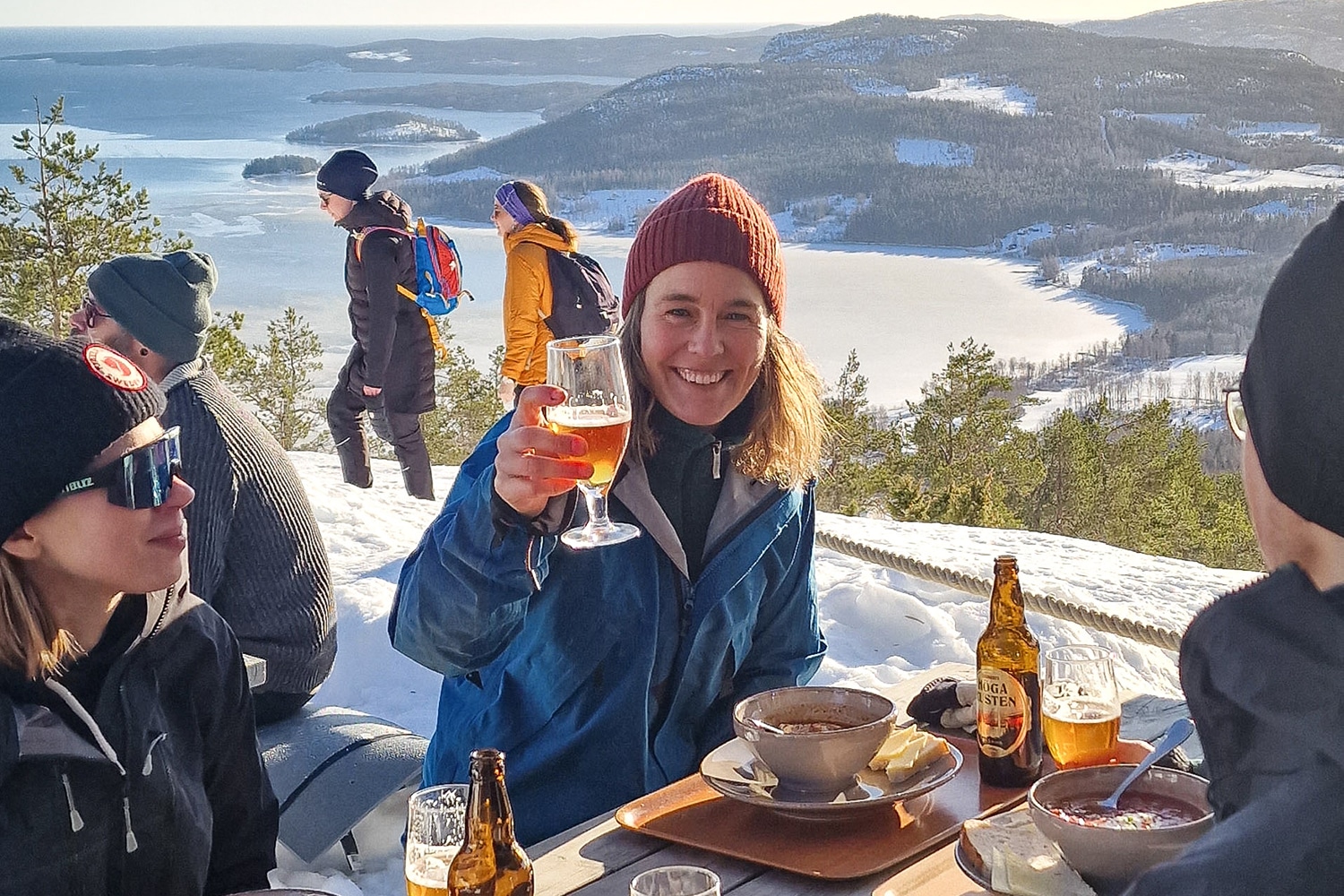
1. SKULEBERGET
Follow the High Coast’s only winter-marked trail to the summit of Skuleberget, at the heart of the World Heritage Site. At the top, Skuleberget Top Cabin awaits with crispy waffles, lunch and some of the most spectacular views in Sweden. Many visitors choose to take the cable car back down.
More info: Snowshoeing at Skuleberget »
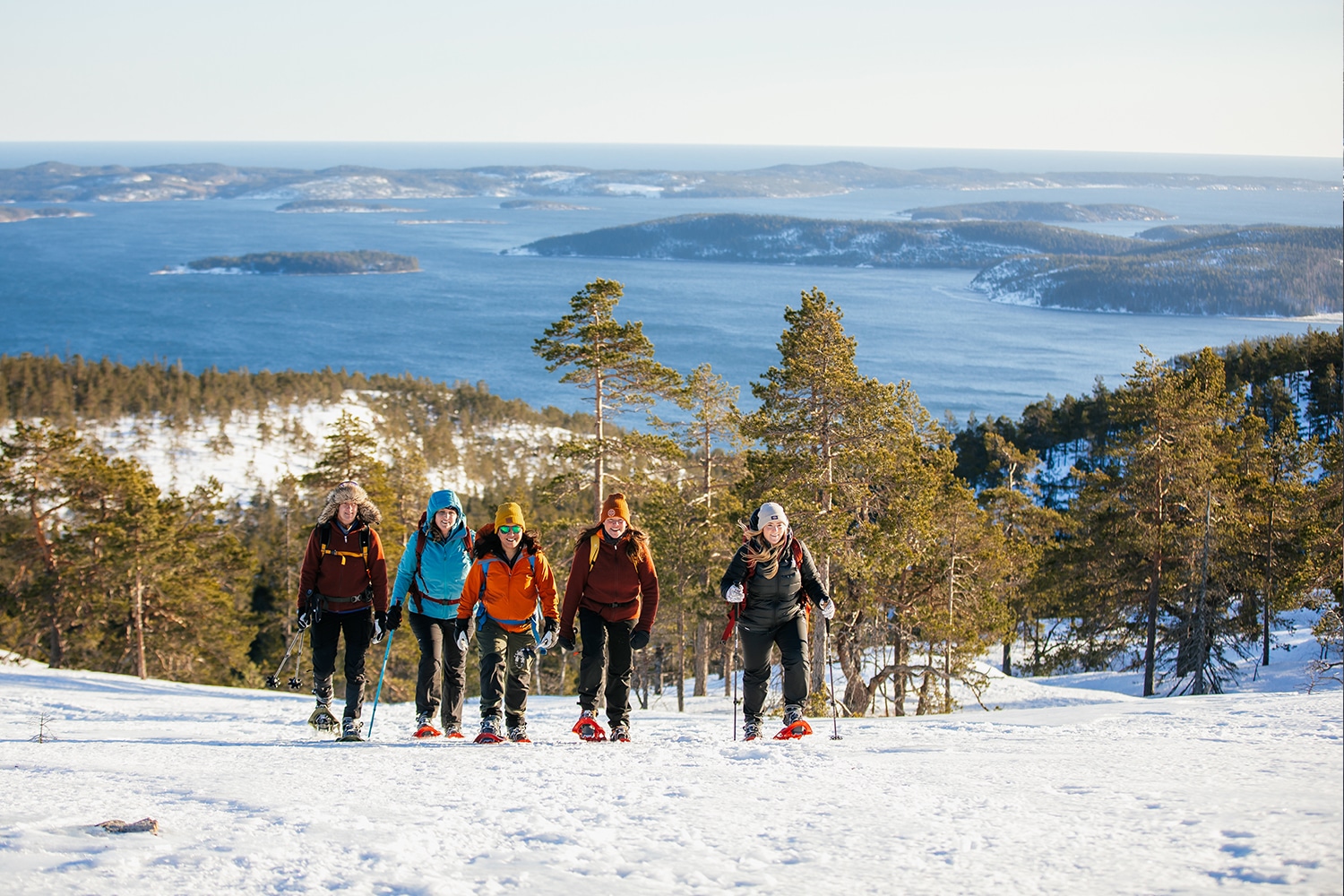
2. SKULESKOGEN NATIONAL PARK
A wilder winter experience in spectacular nature, best suited to hikers with some experience, as trail markings can be covered by snow during winter. If you are hiking without a guide, it is usually wise to visit later in the season, when the most popular routes are more likely to have been packed down by other hikers.
More info: Snowshoeing in Skuleskogen National Park »
3. HIGH COAST WINTER HIKE
A spectacular three-day winter adventure through some of the absolute highlights of the High Coast World Heritage Site, shared with participants from around the world.